Home Blog Page 5

UAE salaries set to rise 5.1% next year – report

0

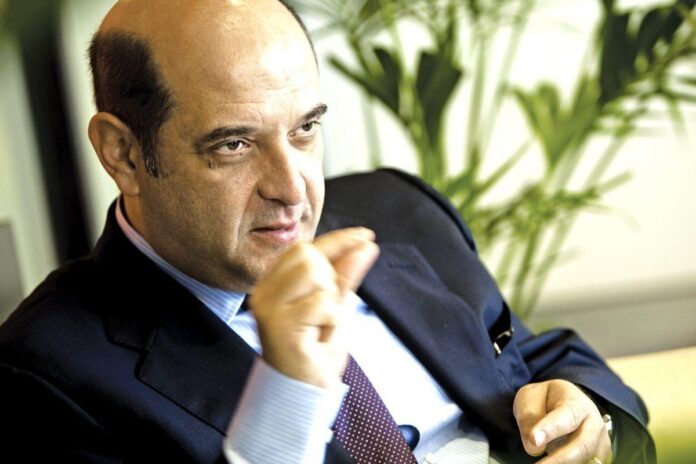
Average salaries in the UAE are expected to rise 5.1 percent in 2013 compared to a Gulf-wide increase of 5.4 percent, according to a new study by consultants Aon Hewitt.

Employees working for banks in the Gulf state will see the largest rise with wages set to increase 8.1 percent next year compared to a 2.5 percent rise in the transportation, logistics and shipping sector.

“All macro-indicators have shown that the economic scenario continues to move in a positive direction with corporates continuing to show confidence in the 2013 economic outlook,” Martin McGuigan, head of reward consulting at Aon Hewitt Middle East said.

“At large, there are no further reductions in the salary increase projections for the next year which is good news for employees.

“We have also observed that organisations have increasingly been linking salary increases to performance, which is a healthy trend and indicates the increasing maturity level of the market,” he added.

The GCC’s combined GDP growth is expected to increase 5.5 percent this year and 3.7 percent in 2013, according to the International Monetary Fund.

Strong economic growth coupled with rising oil prices means less companies operating in the region are likely to freeze salaries, said Aon Hewitt. Only 1.3 percent of firms in the UAE have projected a pay freeze next year compared to 4.1 percent last year.

The major exception to the trend is Qatar where at least 8 percent of firms said they anticipated salaries to stay flat compared to 2.4 percent last year.

“This may be attributed to the high salary increase given to Qatari national employees in 2011, with organisations now trying to induce market competitiveness to normalise the impact,” noted the report.

The survey, which polled more than 500 companies, said average salaries across nine countries in the Middle East would increase 6.08 percent, the same projections made in 2011 for this year.
Air fares jump drives Qatar consumer price rise

0

A near-six percent rise in air fares drove Qatar’s monthly consumer price index (CPI) up in June, the Gulf state’s statistics authority has said.

Qatar Statistics Authority said the CPI for June, was 110.7, a slight increase of 0.5 percent when compared to the previous month.

It was also a 1.6 percent increase compared to June last year.

Compared to May, transport and communications drove the increase in prices, mainly due to a 5.9 percent rise in air fares.

Food, beverages and tobacco prices rose 0.9 percent, with fresh fish and vegetables showing the largest increase of 5.3 percent and 3.1 percent respectively.

The CPI showed no change in rent, fuel and energy prices, or costs of medical care and medical services.

Lebanon, UAE and Saudi Arabia dominate list of influential Arabs

0

Lebanon has contributed the most names to the 2012 list of the world’s most influential Arabs, published on Sunday by Arabian Business.

The list reveals 85 names that originate from Lebanon, with Saudi Arabia contributing 67 and Egypt and the UAE 58 names each. Many US based Arabs are originally Lebanese, according to the magazine.

When it comes to countries of residence, the UAE scores highest with 96 members of the Power 500 living in the country. Saudi Arabia hosts 62, followed by the US on 45, Qatar on 43 and Egypt on 37. Just 29 of the Arabs on the list who originate from Lebanon still live in the country, according to Arabian Business.

Saudi Arabia’s Prince Alwaleed topped the Arabian Business Power List for the eighth successive year.

Emirates Airline chairman Sheikh Ahmed was ranked second. The highest new entry was third placed Reem Asaad, the Saudi woman who launched a campaign to allow women to work in lingerie shops. By July, her campaign paid off when the Saudi Labour Ministry banned men from working in lingerie shops after a directive from King Abdullah – in an instant, creating 44,000 jobs for women.

Emaar chairman Mohamed Alabbar was fourth on the list, with the Libyan activist Mohammed Nabbous in fifth place. Nabbous was the founder of Libya Al Hurra TV in Benghazi,  the first independent broadcast news organisation since Gaddafi took power in Libya. The 28-year old was killed last year by Pro-Gaddafi forces.

“Since his death, many experts in Libya and the west have credited Nabbous for his pivotal role in bringing the world’s attention to the killings in his native country. Without him, it is debatable whether the western powers would have intervened in the conflict,” said Arabian Business.

The 2012 Power 500 contains a record 127 new entries, and also features 105 women, the highest ever number.

Ed Attwood, Editor of Arabian Business, said: “What we have published today is the most comprehensive guide every to Arab influence all across the world. Our researchers have looked at the work of Arabs in every continent and every country across the globe, and covered every sector from business and finance to media, sports and science. It is clear from this list that Arab success and influence across the world has never been more significant than it is today.”

Banking & Finance dominates Power 500 list

0
Sheikh Ahmed bin Saeed al-Maktoum, chairman of Dubai Airports, Emirates Airlines and the new flydubai budget airline, announces on April 6, 2009 the launch of the Gulf emirate's first budget airline which will be taking to the skies in two months despite the global financial crisis. Flydubai will start with flights to the Lebanese capital Beirut on June 1 and to Jordan's capital Amman on June 2, Sheikh Ahmed told reporters. Dubai owns the largest Middle East carrier, Emirates, and has the busiest airport in the region which handled more than 37 million passengers in 2008, a nine percent increase from 2007. AFP PHOTO/KARIM SAHIB (Photo credit should read KARIM SAHIB/AFP/Getty Images)

The Banking & Finance sector has again dominated the 2012 Power 500, published by Arabian Business on Sunday.

The magazine reveals that 19 percent of individuals work in the sector. The next highest category was Culture & Society, accounting for 18 percent of the names, with Construction and Industry contributing 15 percent. Another 14 percent came from Arts and Entertainment, 9 percent from Media, 6 percent from Retail, 6 percent from Science, 4 percent from Sports, and 4 percent from Telecoms. The list shows 3 percent from Transport, with just 2 percent working in Education.

Saudi Arabia’s Prince Alwaleed topped the Arabian Business Power List for the eighth successive year.

Emirates Airline chairman Sheikh Ahmed was ranked second. The highest new entry was third placed Reem Asaad, the Saudi woman who launched a campaign to allow women to work in lingerie shops. By July, her campaign paid off when the Saudi Labour Ministry banned men from working in lingerie shops after a directive from King Abdullah – in an instant, creating 44,000 jobs for women.

Emaar chairman Mohamed Alabbar was fourth on the list, with the Libyan activist Mohammed Nabbous in fifth place. Nabbous was the founder of Libya Al Hurra TV in Benghazi,  the first independent broadcast news organisation since Gaddafi took power in Libya. The 28-year old was killed last year by Pro-Gaddafi forces.

“Since his death, many experts in Libya and the west have credited Nabbous for his pivotal role in bringing the world’s attention to the killings in his native country. Without him, it is debatable whether the western powers would have intervened in the conflict,” the magazine reported.

The 2012 Power 500 contains a record 127 new entries, and also features 105 women, the highest ever number. The UAE has the highest number of entries with 96 on the list, followed by Saudi Arabia with 62 and 45 from the US. In total, Arabs living in 37 different countries are featured on the list.

When it comes to countries of origin, Lebanon contributes the most with 85 entries, followed by 67 from Saudi Arabia and 58 from Egypt.

Ed Attwood, Editor of Arabian Business, said: “What we have published today is the most comprehensive guide every to Arab influence all across the world. Our researchers have looked at the work of Arabs in every continent and every country across the globe, and covered every sector from business and finance to media, sports and science. It is clear from this list that Arab success and influence across the world has never been more significant than it is today.”

National Bonds see 14% savings hike outside UAE

0

National Bonds Corp has seen a 14 percent increase in the number of foreigners investing in its Islamic savings scheme and may look to expand its presence outside of the UAE in future.

The Dubai government-controlled firm said it has seen a 40 percent rise in the value of funds being saved by investors outside the UAE.

“We are seeing an increase in the number of customers living outside the UAE who opted to start their savings plan with National Bonds mainly during their visit to the UAE,” Mohammed Qasim Al Ali, CEO of National Bonds Corporation, said in a statement.

“It is impressive when you note that we do not yet have a physical presence abroad, which could be of potential for us in the future,” he added.

Recent instant National Bonds millionaires have included savers from neighbouring Arab and Asian countries as well as the Philippines, Canada, Ireland, UK and Sudan, said the firm.

National Bonds Corp in March announced an annual profit rate of two percent in 2011, down from 3.78 percent the previous year. Despite the decline, the firm said profit for its Mudaraba fund rose 23 percent while its bond sales hit AED2.39bn (US$651m).

Here’s how GCC central banks are reacting to the US Fed’s rate cut

0

Most Gulf central banks cut their key interest rates on Wednesday after the Federal Reserve decreased US rates by half a percentage point, citing ‘greater confidence’ on inflation.

The Fed cut its rate by 50 basis points (bps) on Wednesday with policymakers seeing the benchmark rate falling by another half a percentage point by the end of this year.

The Gulf region’s oil and gas exporters tend to follow the Fed’s lead on rate moves as most regional currencies are pegged to the US dollar; only the Kuwaiti dinar is pegged to a basket of currencies, which includes the dollar.

But regional economies have been largely shielded from stubbornly high inflation elsewhere, and have implemented ambitious plans to diversify revenue sources and boost non-oil growth.

Saudi Arabia, the region’s biggest economy, cut its repurchase agreement (Repo) rate and reverse repo rate by 50 bps each to 5.5 per cent and 5.0 per cent respectively, according to a central bank statement.

The United Arab Emirates’ central bank also reduced its base rate on the overnight deposit facility by half a percentage point to 4.90%.

“A Fed rate cut signals a favourable environment for the Gulf’s long-term investment and economic diversification objectives,” said Damian Hitchen, CEO of Saxo Bank for the Middle East and North Africa.

“With lower borrowing costs, investments in non-oil sectors, such as tourism, renewable energy, and technology, become more attractive, aligning with the region’s strategic goals to reduce reliance on oil,” he added.

Qatar’s central bank cut three key rates by 55 bps each, while Bahrain cut the overnight deposit rate by 50 bps. Kuwait reduced its discount rate by a quarter percentage point to 4% from 4.25%.

A Reuters poll in July showed that inflation in the region was expected to average between 1.0% and 3.0% in 2024.

Kuwait salaries up 5% on average over past year

0
Riyadh, SAUDI ARABIA: TO GO WITH AFP STORY BY LYDIA GEORGI: A US citizen chats with Saudi man at a US coffee chain Starbucks in the Saudi capital Riyadh, 28 February 2007. Western embassies in Saudi Arabia have advised their nationals to be on alert, after the killing of four Frenchmen left expatriates wondering if this might signal a resumption of anti-Western attacks. Several residents on Wednesday said that while they were shocked by Monday's shootings near the Muslim holy city of Medina, they would only be alarmed if a further attack took place. AFP PHOTO/HASSAN AMMAR (Photo credit should read HASSAN AMMAR/AFP/Getty Images)

Bonuses in 2011 were seven percent higher compared to 2010, according to Hay which analysed data for more than 100 organisations in Kuwait and more than 30,000 employees.

Its study included data from both national and multi-national companies from major sectors including chemicals, banking, retail, automotive and FMCG.

Basic pay increased by five percent while participating organisations forecast an increase of a further five percent over the next year.

Hay Group’s Panos Sotiropoulos said: “Pay rises are tracking inflation meaning employees see no significant reduction in their buying power.

“Of course this varies from sector to sector and according to nationality with Kuwaiti nationals being paid above the general market.”

He said the banking sector paid 60 percent above the market average, a trend Hay sees to some extent across the GCC.

He added: “Kuwait’s drive to recruit nationals into the workforce is having an impact on pay levels with nationals being paid an average of 24 percent above the general market. At the executive level nationals are paid 45 percent more than expatriate workers.”

At the lower levels, the disparity is smaller with Kuwaitis receiving an average of 20 percent more than expatriate workers, the Hay study showed.

Saudi Arabia approves first ETFs tracking Hong Kong-listed equities

0

Saudi Arabia has granted approval for its first exchange-traded funds (ETFs) tracking equities listed in Hong Kong on Tuesday, the Capital Market Authority (CMA) said, marking the debut of such a product in the Middle East.

The move follows efforts by Beijing and Hong Kong to deepen ties with Arab countries in response to escalating tensions with the West.

Saudi Arabia’s CMA said in a statement it approved local asset manager AlBilad Investment Company’s request to offer “Albilad CSOP MSCI Hong Kong China Equity ETF” units on the Saudi Exchange (Tadawul). However, the regulator did not disclose the fund’s launch schedule.

The ETF is a collaborative effort with Hong Kong’s CSOP Asset Management and focused on Hong Kong-listed companies, including Chinese firms traded in the city.

Last November, Hong Kong launched Asia’s first ETF tracking Saudi equities, the CSOP Saudi Arabia ETF, and has been actively seeking cross-listing opportunities in both capital markets.

The size of the Hong Kong-listed ETF has expanded to nearly $1.28bn (HKD10bn).

Julia Leung, CEO of Hong Kong’s Securities and Futures Commission, visited Saudi Arabia to meet officials and discuss the potential listing of the ETFs on each other’s exchanges in June.

China also approved its first two mainland-listed ETFs in June, tracking Hong Kong’s CSOP Saudi Arabia ETF. The move aims to further strengthen financial sector cooperation between the two regions and provide Chinese investors with exposure to Middle Eastern companies.

UAE close to finalising new bankruptcy law

0
viva for patricia9.jpg

The UAE is close to finalising an updated federal bankruptcy law and a draft of the legislation should be ready by the end of this year, Justice Minister Hadef bin Juan al-Dhaheri said on Monday.

The draft, which has been in the works since 2009, should enable both listed and family-owned companies in the UAE to be rescued rather than having to go through lengthy bankruptcy or liquidation proceedings.

“The ministry is studying a set of laws,” Dhaheri told a conference on financial restructuring and bankruptcy in Dubai.

“Among them is a federal law on foreign investment, another one on SMEs (small and medium-sized enterprises) and also another law on arbitration in commercial transactions and another one on bankruptcy and restructuring,” he said.

Asked whether the government was going to clear the long-awaited bankruptcy legislation this year, Dhaheri later told reporters: “Hopefully, God willing.”

Dubai’s debt crisis in 2009-2010 put company restructuring firmly in focus for both the government and investors. However, existing federal bankruptcy laws remain untested in UAE courts as distressed companies prefer to settle creditor claims privately because the existing legislation is opaque and complex.

In 2009, Dubai, one of seven UAE members, issued a special decree to deal with a $25bn debt restructuring at its flagship conglomerate Dubai World.

Dhaheri also said another draft, on foreign investment, was still being discussed by the ministry’s legal committee but declined to give details and timing: “I can’t give a framework for it.”

The new UAE bankruptcy law may ease debt restructurings with greater provision for out-of-court negotiations and the government hopes it would help attract more foreign investors.

In addition, it contains provisions that can force a minority of creditors to accept a restructuring agreement if it is acceptable to the majority, a process known as a cramdown.

However, it will still be difficult to seize assets – even if they are pledged as collateral – since land ownership in the UAE is on the whole restricted to citizens, with some provisions for nationals of other countries in the Gulf Cooperation Council.

So international banks involved in a state-linked corporate restructuring would not be able to take control of assets and sell them on to realise their dues, as would happen in the West.

The new law will not apply to government entities or entities operating in a financial free zone such as the Dubai International Financial Centre, which has its own insolvency laws, experts have said.

It takes just over five years to resolve insolvency in the UAE, one of the world’s top five oil exporters, with a recovery rate of only 11 cents on the dollar, which puts the country at 151st place globally, according to a World Bank survey.

Al Hilal launch Middle East’s first drive-through bank

0
Al Hilal Bank CEO Mohamed Berro , interview and profile pictures taken in Al Hilal Bank Main Office in Abu Dhabi .Photo Mosh Lafuente

Al Hilal Bank has launched its Money Station branch in Dubai, introducing the Middle East’s first-ever drive-thru teller system that allows customers to carry out their transactions within the comfort of their own cars.

“Our focus has been from day one on innovation in our products and services,” said Mohamed J. Berro, group chief executive officer of the Islamic bank. “This is a full comprehensive banking solution through drive-thru.”

Similar to the concept of a gas station, the money station allows its customers to attain their needed services without having to step foot out of their comfort zones.

“There are tellers outside that serve these customers that come through the money station,” he said. “They do their complete banking transactions while in the car. There is an actual customer service that finalizes their requirements.”

Customers park beside one of three paralleled money stations, all of which are designed to give the familiar feel of filling up petrol. Once parked, a teller appears on a small screen, ready to attend to the required service. All documents that need to be handed to the teller are placed in a tube, and then sent up a slot through the click of a button.  The documents are sent back to the customer through the same slot.

Berro added:  “Dubai is a city that has always been at the forefront of innovation, and I think this is another addition that fits very well within the DNA of Dubai.”

Although tube-banking has been used in the United States, this is the first time it has been implemented in this region, with the company pointing to increased competition within the banking sector as one of the key reasons for the launch.

“Competition has been very healthy within the UAE. Competition drives … better service, drives better products, better prices from the consumer or to the banking population,” he said. “This is why the banking sector in the UAE is recognized as a very advanced banking sector globally.”

“This [technology] is the first in the Middle East and we are proud for that,” he said. “This is yet another innovative action that the bank has done to continue to position [itself] as a modern, innovative, Islamic Bank.”