Home Blog Page 4

Locals paid more than us, moan GCC expats – poll

0
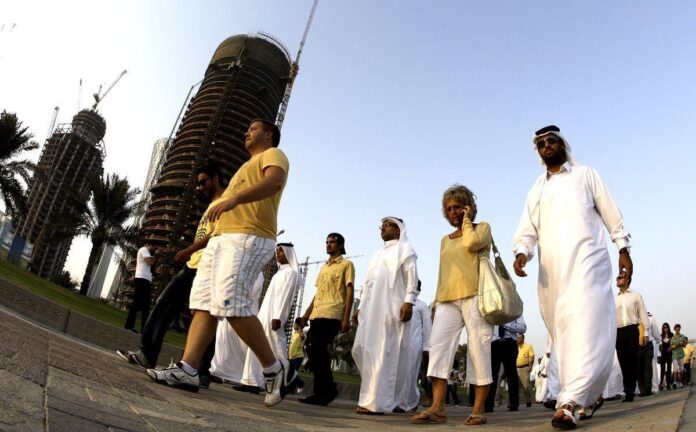
TO GO WITH AFP STORY BY ACIL TABBARA Emirati men walk opposite a foreign woman in the Gulf emirate of Dubai on March 23, 2010. Emiratis, a minority in their homeland, no longer hesitate to denounce the sometimes-offensive liberal customs of foreigners who have boosted the country's economic success. AFP PHOTO/KARIM SAHIB (Photo credit should read KARIM SAHIB/AFP/Getty Images)

Nearly half of all expats in GCC nations claim that nationals are paid better salaries than them, according to the findings of a poll.

The survey by jobsite Bayt.com found that 46 percent of residents in the UAE, Bahrain, Saudi Arabia, Qatar, Oman and Kuwait believe nationals of these countries are paid more, while a third (35.6 percent) claim governments lean on their employers to encourage them to hire more citizens.

Nationalisation of the workforce is a key policy in countries including the UAE and Saudi Arabia, where citizens of subcontinental and western nations vastly outnumber locals.

In the UAE, nationals are said to make up less than 1 percent of private sector employees and unemployment runs at 14 percent.

The Bayt.com study also found that more than half of respondents (52 percent) believed that GCC governments’ nationalisation programmes were effective, with 42 percent stating that Gulf citizens were given support by authorities in terms of finding a job.

Last year, Dubai ruler Sheikh Mohammed bin Rashid Al Maktoum called on the country’s private sector to contribute more in terms of hiring locals.

“I call on my colleagues in the private sector that have benefited greatly from this country to extend a helping hand in the process of Emiratisation, even in a tiny percentage, to make a contribution to growth of this country,” Sheikh Mohammed said.

Sheikh Mohammed revealed plans for a project to employ 120,000 UAE nationals, but did not give any further details of the timeline or specifics.

The Dubai ruler, who is also vice president of the oil-rich UAE, declared 2013 the ‘Year of Emiratisation’. As part of the initiative, events will be held to offer “opportunities for young Emiratis seeking to join the UAE labour force”.
One-fifth of GCC expats saving nothing – poll

0
British expatriates and relatives of Qatari teenager Mohammed al-Majed, who died in Britain last month, hold a march in solidarity with his family in Doha on September 8, 2008. The 16-year-old teenager died in the southern British coast resort of Hastings after what police called a racially motivated assault. Al-Majed died of head injuries sustained from hitting the pavement after an altercation on August 22 between his friends and a gang of local youths outside a kebab shop. AFP PHOTO/KARIM JAAFAR (Photo credit should read KARIM JAAFAR/AFP/Getty Images)

Nearly half of the GCC workforce has less than US$5,000 in savings, while more than one-in-five do not save at all, according to a survey revealing the “rather low” level of savings in the region.

Expatriates living in the GCC were more likely than nationals to save and to have a larger savings pool, the survey by Towers Watson, a global professional services company, found.

But despite perceptions that residents in the GCC were good savers, the survey found nearly half of the population puts away less than 10 percent of their salary.

“This contradicts the impression that residents of the GCC save a significant proportion of their income and is surprising given the prolonged global economic uncertainty,” the report says.

The GCC savings rate – 15.37 percent – is significantly lower than countries such as China (27 percent) and India (22 percent).

The rate among GCC expats is higher at 16.89 percent compared to nationals at just 12.27 percent.

About 13 percent of the 2,600 employees who responded to the survey said they had US$5,000-10,000 in savings, while another 10 percent had between US$10,000-20,000.

One-third of the GCC population has more than US$20,000. However, the rate is much higher for expatriates, at almost half.

Housing (25 percent) was the main motivator to save, followed by the desire to have precautionary savings (19 percent).

Expats also were concerned about putting money aside for their children’s education (21 percent), with this reason rated three times more important than for nationals (7 percent).

Younger respondents (aged 20-29) were highly motivated to save for their wedding (25 percent), as well as housing (23 percent) and precautionary (17 percent).

Older people used their savings for children’s education (24 percent), a rainy day (22 percent) and retirement (17 percent).

Wealth accumulation (10-12 percent) also was a key motivator but retirement was seventh on the list of motivators, with just 7 percent of respondents listing it.

“This suggests that retirement is not an immediate worry for employees and comes only after more current concerns,” the report says.

The CEO of National Bonds, the Dubai-owned Islamic savings scheme, has previously expressed his concern that UAE residents are not saving enough money for their future.

The scheme’s savings index, which measures saving sentiment in the Gulf state, had seen only a “slight increase” during 2012, while there had been a 3.4 percent increase in the number of people investing in National Bonds in the first half of 2012 compared to the previous year.

National Bonds CEO Mohammed Qasim Al Ali said the vast majority of residents still do not save enough.

“A lot of people, unfortunately, in this part of the world, they live pay cheque to pay cheque and that needs to change,” he said. “We cannot work alone; the government intuitions have to play a role [and the] education system has to play a role.”

Kuwait to bailout $3.6bn in loans

0

Oil-rich Kuwait will bail out billions of dollars worth of bank loans taken out by nationals in the lead up to the global financial crisis.

The government reached a provisional agreement on Tuesday to buy all bank loans taken out by Kuwaiti citizens between January 1, 2002 and March 30, 2008 and reschedule them interest free.

The new repayments would not exceed 40 percent of a borrowers monthly income, financial and economic affairs committee chairman Yussef al-Zalzalah said, according to news agency AFP.

MPs claim banks violated lending rules during the period by charging higher interest and the Central Bank of Kuwait failed to apply the law.

Parliament is still considering a parallel proposal to give 1000 dinars (US$3500) to Kuwaitis who will not benefit from the scheme, which could cost an additional US$1.2 billion.

The government rejected a similar bill passed by parliament in January 2010, when the debt was worth at least $21.6 billion and the interest $5.2 billion.

The change in government position came amid a bitter political dispute in the emirate and after the election of a pro-government parliament in a December poll boycotted by the opposition, which has staged several street protests.

Kuwait mulls writing off $6bn in citizens’ personal debt

0

Kuwaiti MPs will this week debate a motion to write-off the interest accrued on Kuwaitis’ loans from local banks taken out prior to the global financial crisis, estimated to cost the government US$6bn.

Under a draft law already approved, the government will purchase loans taken out prior to April 1 2008, and then reschedule the repayments while writing off the interest.

The proposal could affect tens of thousands of Kuwaitis.

The Kuwait Central Bank estimated the move would cost KWD1.7bn.

However, the legislation is yet to be fully approved after some MPs said it was unfair to Kuwaitis who were not affected by the financial crisis.

In a compromise, they suggested the government also pay KWD1,000 to every Kuwaiti who would not benefit from interest write-off.

UAE among cheapest for remittances – World Bank

0
Applicants queue up for job opportunities offered by a recruitment agency looking for workers in the US, Canada, Japan and the Middle East, at a job fair in Manila on August 16, 2008. Money sent home by Filipinos working abroad rose 30 percent in June from a year earlier to 1.5 billion dollars, the Philippine central bank said. The bank expects overseas worker remittances to hit a record 15.9 billion dollars this year, up 10 percent from 2007. More than eight million Filipinos, out of a population of 90 million, work abroad and their remittances are a major source of foreign exchange and are a significant contributor to the country's gross national product. AFP PHOTO/Jay DIRECTO (Photo credit should read JAY DIRECTO/AFP/Getty Images)

The United Arab Emirates is one of the cheapest places in the world from which to send remittances to foreign countries, according to the World Bank.

Migrant workers in Saudi Arabia also pay among the lowest fees to transfer money home, with the entire Gulf region highlighted as the best globally, despite costs rising last year.

“Whilst the costs in these markets can vary from month to month, their competitiveness in comparison to other sending markets in the sample reflects the fact that the Gulf region is amongst the cheapest for remittances globally thanks to the high level of competition achieved in these markets,” a World Bank statement said.

South Asia is the cheapest region to send money to, with an average of 6.54 percent.

About 80 percent of the UAE’s population of an estimated 8.3m people are expats, of which a significant portion send remittances to family in countries such as India, Pakistan, Sri Lanka and the Philippines.

According to the World Bank, sending remittances from the UAE to Pakistan (an average 4.92 percent of the money transferred) is the cheapest corridor in the world, while the UAE to Sri Lanka (6.35 percent) is the fifth cheapest.

Saudi Arabia to Pakistan (5.63 percent) and Yemen (5.92 percent) are the third and fourth least expensive corridors, considering the transaction fee and exchange rate margin.

To send US$200 from the UAE to India – where a significant chunk of the nation’s earnings are sent – costs an average 5.02 percent, while it can be as cheap as 2-3 percent depending on the bank used.

It will cost an average 5.63 percent to send US$200 in remittances to Nepal, 3.18 percent to Sri Lanka, 3.23 percent to the Philippines, 4.06 percent to Egypt, 2.46 percent to Pakistan.

UAE facing pensions ticking time bomb – report

0

A new report has revealed that residents in the UAE are facing a pensions ticking time bomb as they delay saving long term, compared to people in other countries.

The survey from HSBC shows that 46 percent of the country’s residents believe that, despite tax-free salaries, they are being held back by the high cost of living, with a similar number fearing financial hardship in old age. More than 80 percent of the UAE population consists of expats.

Only 29 percent of people felt they were adequately preparing for retirement, with the majority of people beginning to save at the age of 30. This is in contrast to the UK and US, where people start to save in their mid-20s. Indeed, 89 percent of people were unable to describe their current savings as ‘more than adequate’ for the future.

The survey took opinions from 15,000 in 15 countries around the world, with about 1,000 people from the UAE being interviewed.

Among its findings, the report said that on average people in the UAE felt they needed an annual household income of AED126,000 (US$34,303) to be comfortable in retirement.

Other reasons behind the failure to save were given as the lack of pension schemes for non-Emiratis, lack of understanding of savings and investments, and the notion that retirement is too far away to worry about.

The report also showed that people in the UAE are severely impacted by ‘life events’ – a term used to describe moments in a person’s life where a significant amount of money needs to be spent or is no longer available as income. These include the recession and losing a job. In the UAE, common life events are buying a home and paying for children’s educations. Of the people interviewed, two thirds said they are still suffering from the impact of such events.

Rick Crossman, head of retail banking & wealth management, United Arab Emirates, HSBC Bank Middle East Limited, said: “It is natural to prioritise immediate needs and wants above longer term financial health, but these ‘savings gaps’ that occur due to a lack of financial preparation, can equate to serious holes in people’s retirement savings in the long run, once interest and investment growth are taken into account.”

Other figures from the report show that 58 percent of people want to spend more time with friends and family during retirement, while 51 percent wish to start a new business.

UAE citizens “blindly” signing up for loans – dep pm

0

Up to 1,600 UAE citizens have signed up for a AED1bn (US$410m) government-backed personal debt settlement scheme, the Gulf state’s deputy prime minister said.

Speaking at the Government Summit in Dubai, Sheikh Mansour bin Zayed said Emirati nationals were “blindly” signing up for personal loans that they were unable to pay back later, leading the government to create a personal debt bail out scheme.

“A loan is a dilemma, do not get into it. You should be careful when it comes to personal loans,” he said. “The banks are taking advantage of the unawareness of some Emiratis who blindly sign on the contracts.”

Last year, UAE authorities set aside AED1.05bn (US$410m) for the Nationals’ Defaulted Debts Settlement Fund, a programme aimed at clearing defaulted debts owed by Emirati nationals.

Under the directive, rescheduling of loan repayments by indebted citizens will not exceed 50 percent of their monthly salaries, while banks have agreed to cut interest on monies owed by 1 percent.

Sheikh Mansour said the fund had dealt with approximately half of the 3,200 registered Emirati applicants. “There is a lot of confusion about the law; it is simple and clear. Any person that with personal loan debts and not commercial or trade loans unpaid before December 2011 will have it covered by the programme.”

The 17 banks taking part in the fund include are National Bank of Abu Dhabi Bank, Abu Dhabi Commercial Bank, First Gulf Bank, Abu Dhabi Islamic Bank, Union National Bank and Al Hilal Bank.

Funding the micro-entrepreneurs

0

Scattered in small workshops throughout Cairo, some micro-entrepreneurs have long struggled to find customers to purchase wares such as mechanical sunshades, clay pottery coolers and printing presses. Now some of them are turning to the crowd-funding site Yomken, which launched in Egypt in October, to connect with individual investors, scientists and research centres willing to either pre-purchase industrial goods or collaborate on design improvements.

“In Egypt, micro-entrepreneurs are facing intense competition from China and Asian borders, and there is no support system [for] the bottom of the economic pyramid,” says Tamer Taha, chief executive of Yomken.

Crowd-funding sites act as middlemen between investors and entrepreneurs. The biggest players — Kickstarter and Indiegogo — have become known for some of the quirkier products that people have pitched on their sites, including watches made out of old iPod Nanos that have raised millions of dollars over different stages of development.

More home-grown ventures are now cropping up in the Middle East and North Africa to cater specifically to Arabs. Yomken, Aflamnah and Flooosy have each recently launched in this region, while another potential player — Mawwell — appears ready to join the fray.

“This trend is real, it’s growing and it’s a movement we should all take notice of,” says Jonathan Axtell, program director at The Hub Bay Area, a group that helps entrepreneurs in the United States and is opening an office in Dubai.

Globally, there are now more than 450 crowd-funding platforms in operation. They are projected to raise a total of $6.2bn in funds mostly for entrepreneurs and small to medium enterprises (SMEs) next year, which is up from $1.6bn in 2009, according to data from the research firm Gartner.

Making over the multi-billion microfinance industry

0

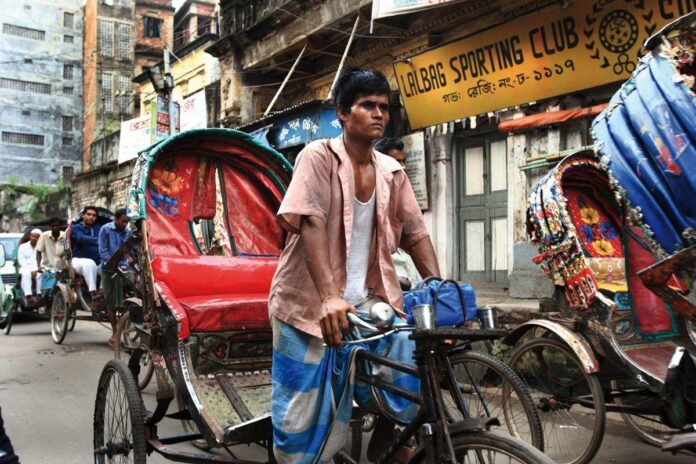
Thousands of rickshaw drivers cram into the city streets of Bangladesh every day. But at least one driver escaped this urban nightmare to pursue his rural dream of becoming an entrepreneur back in his home village.

He started by plunging into his savings and topping it off with an interest-free loan of less than $150. He then bought a phone recharging and tuck shop, quadrupling his monthly income from around 200 Bangladeshi takas — or less than $2.50 — to 800 takas. After he grew his savings and learned about personal financial management, he started a side-game of agricultural upgrades: he bought a goat that he later sold for a cow, after which he purchased three more cows to sell in a nearby market.

“Two months back he married off his little sister and was quite happy about it, because before he didn’t have the money to arrange the wedding,” says Armin Zaman Khan, an executive member at CommunityAction, a student-led organisation that provides poor Bangladeshis with interest-free microloans.

So go some of the successful start-up stories in the developing world, where hundreds of microfinance institutions lend as much as $70bn annually to financially strapped but aspirationally rich entrepreneurs. Around 600 organisations have loaned $12bn to more than 10 million low-income clients in Latin America and the Caribbean alone, according to the Inter-American Development Bank. In India, this sector has been valued at $5 to $7bn annually.

Now, some organisations with links to microfinance institutions are looking to spur similar activity in the Middle East and North Africa. Kiva is a non-profit that boasts a network of more than 160 microfinance partners that have helped loan $368m since 2005. “We’re hoping to expand over the next couple of years [in Mena], so Kiva can be one of the main players,” says Michael Looft, Kiva’s regional director for Europe, Asia and the Middle East.

Credit for sparking the global microcredit movement largely goes to a Bangladeshi economist and banker — Muhammad Yunus — who created Grameen Bank. In 2006, they jointly won the Nobel Peace Prize “for their efforts to create economic and social development from below.” All of a sudden, creditors from around the world started aggressively courting small-fry entrepreneurs and touting default rates of just one to two percent.

But heated growth in the industry has also ignited a financial firestorm of controversy. Some microfinance institutions have been criticised for charging high interest rates that can range from 15 to 50 percent but top 100 percent, most notably in unregulated markets. Other organisations have been attacked for aggressive collection methods that have “resulted in cases of forced prostitution, child labour, suicide, and nationwide revolts against the microfinance community,” argues a new book from Hugh Sinclair, an industry insider who wrote Confessions of a Microfinance Heretic: How Microlending Lost Its Way and Betrayed the Poor.

“Microfinance went through the same mistakes as banks,” says Celia de Anca, director of the Saudi-Spanish Center for Islamic Economics and Finance in Madrid. “It became a business and it was fashionable, so everyone went into it. Now, there’s a lot of criticism against them.”

Even Yunus has come under fire. Last year, he was forced out of the bank he founded, reportedly because he did not comply with a certain rule when he created Grameen. Meanwhile, his country’s prime minister, Sheikh Hasina, has accused some microlenders of “sucking blood from the poor in the name of poverty alleviation.”

Lenders say they have no choice but to charge high administrative costs to reach remote areas, or because they can’t invest money from clients the same way normal banks do. “It’s really hard because every market is different,” says Looft. “In some places you see high interest rates but they’re serving a bunch of islands and their costs are so high.”

Even so, some players in this sector have responded by trying to distance their lending practices from others that have been knocked for high costs.

QNB board approves QAR2.9bn share buyback program

0

Qatar National Bank (QNB Group), the biggest GCC lender by assets, said on Thursday that a new $796.7m (QAR2.9bn) stock repurchase authorisation has been approved by its board of directors.

The Qatari lender said the rationale behind the buyback is driven by its robust financial standing, characterised by significant cash flow and a strong balance sheet, and its growth ambitions.

“QNB’s share buyback is a confidence-building measure that is expected to raise investors’ trust in its robust capital allocation process, improve market liquidity, and enhance returns,” the banking group said in a bourse filing.

The share buyback will be conducted using the open-market repurchase mechanism and will financed by the lender’s retained earnings and excess cash reserves. It is subject to regulatory approvals from the Qatar Central Bank and Qatar Financial Markets Authority.

QNB reported a 7 per cent increase in half-year net profit to QAR8.2bn, citing a “robust and consistent performance” amid a surge in operating income and total assets. Its operating income rose by 9 per cent to reach QAR20.1bn in the six months to June 30.

The banking group had QAR1.3tn in total assets in the January-June period, a 5 per cent increase, driven by growth in loans and advances by 7 per cent to reach QAR879bn.