Home Blog Page 3

UAE banking sector’s liquid assets exceed Dhs800bn in Q2 2024

0

The UAE banking sector’s liquid assets registered a rise in Q2 2024, according to the latest figures from the Central Bank of the UAE (CBUAE).

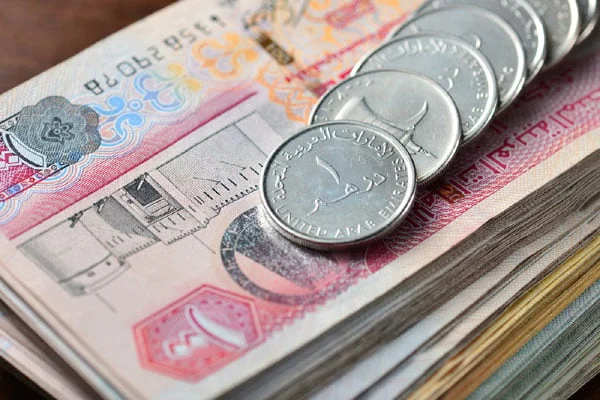
The CBUAE’s Core Financial Soundness Indicators – Q2 2024 report, showed that liquid assets in the banking system reached Dhs801.52bn, marking a 20.2 per cent year-on-year increase from Dhs666bn at the end of Q2 2023. This represents a growth of Dhs135bn over the year.

On a quarter-on-quarter basis, liquid assets rose by 2  per cent, or Dhs14.9bn, compared to Dhs786.6bn at the end of Q1 2023.

Liquid assets accounted for 18.9 per cent of the UAE banking sector’s total assets, which stood at Dhs4.244bn at the end of Q2 2024, slightly higher than the 18.8 per cent recorded in Q1 2024.

Country’s banking sector is “well capitalised”, says CBUAE

The report also highlighted that the UAE banking system remains well-capitalised, with a total capital adequacy ratio of 18.3 per cent at the end of Q2 2024, up from 18 per cent in Q1 and 17.9 per cent at the end of 2023.

This ratio remains well above the minimum regulatory requirement of 13 per cent, which includes a capital buffer of 2.5 per cent and a minimum Tier 1 capital ratio of 8.5 per cent, as per the Central Bank’s Basel III regulations implemented in December 2017.

Capital adequacy ratios are critical in safeguarding depositors and ensuring the financial system’s stability.

The Tier 1 Capital Ratio of the UAE banking sector rose to 17 per cent in Q2 2024, up from 16.7 per cent in the previous quarter, while the Common Equity Tier 1 capital ratio increased to 15.3 per cent, compared to 15 per cent in Q1 2024 and 14.9 per cent at the end of 2023.

These robust indicators underline the continued strength and resilience of the UAE’s banking sector amidst global financial challenges.
AD Ports Group refinances $2.25bn debt, cuts borrowing costs

0

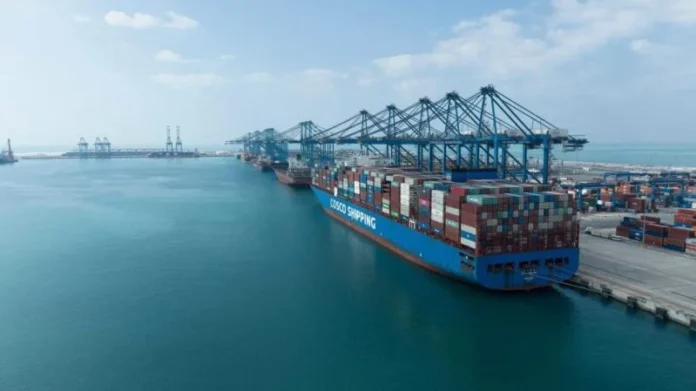
AD Ports Group has refinanced a $2.25bn syndicated loan, securing more favourable terms with two UAE-based banks.

The move is expected to result in savings of up to Dhs44m ($12m) in finance costs over the next 12 months.

The refinancing aligns with the group’s strategy to utilise bonds as a primary long-term funding tool while extending its debt maturity profile.

New agreements to give AD Ports greater flexibility

The group has replaced the $2.25bn loan, originally obtained in April 2023, with a Dhs9.2bn ($2.5bn) medium-term facility with a 2.5-year maturity and a shorter Dhs1bn ($273m) facility with a 1.5-year tenor.

The restructuring coincides with the US Federal Reserve’s decision to cut interest rates, marking the first rate reduction since March 2020, providing AD Ports the opportunity to lock in lower borrowing costs.

“The new refinancing agreements give us greater financial flexibility and significantly lower financing costs, positioning us to capitalise on easing interest rates when accessing the debt capital markets,” said Martin Aarup, chief financial officer at AD Ports Group.

The group, rated “A+” by S&P and “AA-” by Fitch, expects the refinancing to enhance its capital structure and support long-term growth.

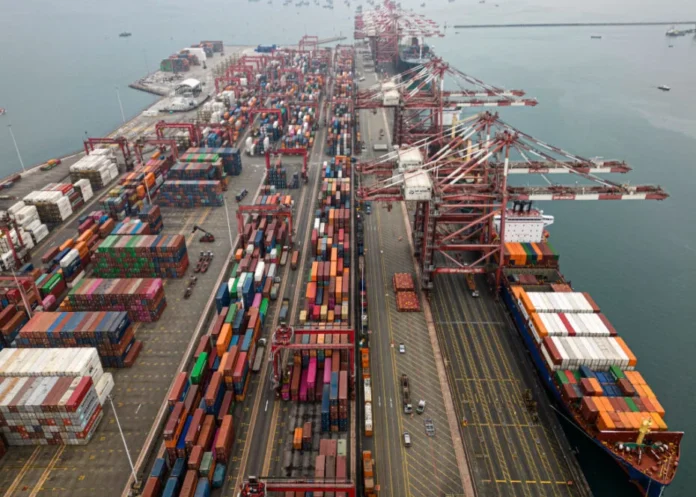
In other news, AD Ports Group has entered the global top 20 ranking of port operators, securing the 19th spot in the latest survey by Drewry, a UK-based maritime research and consulting firm.

The group’s rise in the rankings underscores its rapid expansion and growing industry clout, driven by strategic acquisitions and new operating concessions.

The inclusion of AD Ports Group in the Drewry Top 20 League Table, part of the firm’s 2024-2025 annual industry report, is a significant milestone for the UAE-based operator.

AD Ports Group has refinanced a $2.25bn syndicated loan, securing more favourable terms with two UAE-based banks.

The move is expected to result in savings of up to Dhs44m ($12m) in finance costs over the next 12 months.

The refinancing aligns with the group’s strategy to utilise bonds as a primary long-term funding tool while extending its debt maturity profile.

New agreements to give AD Ports greater flexibility

The group has replaced the $2.25bn loan, originally obtained in April 2023, with a Dhs9.2bn ($2.5bn) medium-term facility with a 2.5-year maturity and a shorter Dhs1bn ($273m) facility with a 1.5-year tenor.

The restructuring coincides with the US Federal Reserve’s decision to cut interest rates, marking the first rate reduction since March 2020, providing AD Ports the opportunity to lock in lower borrowing costs.

“The new refinancing agreements give us greater financial flexibility and significantly lower financing costs, positioning us to capitalise on easing interest rates when accessing the debt capital markets,” said Martin Aarup, chief financial officer at AD Ports Group.

The group, rated “A+” by S&P and “AA-” by Fitch, expects the refinancing to enhance its capital structure and support long-term growth.

In other news, AD Ports Group has entered the global top 20 ranking of port operators, securing the 19th spot in the latest survey by Drewry, a UK-based maritime research and consulting firm.

The group’s rise in the rankings underscores its rapid expansion and growing industry clout, driven by strategic acquisitions and new operating concessions.

The inclusion of AD Ports Group in the Drewry Top 20 League Table, part of the firm’s 2024-2025 annual industry report, is a significant milestone for the UAE-based operator.

UAE, Egypt discuss strategic cooperation during high-level meet

0

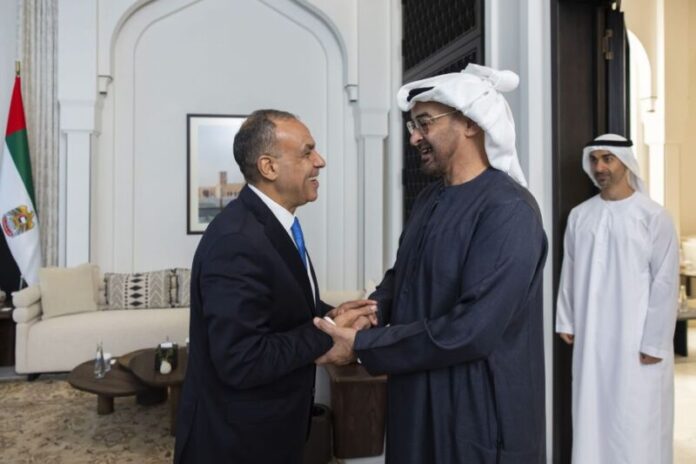
The UAE’s President Sheikh Mohamed bin Zayed Al Nahyan hosted Dr Badr Abdel Ati, Egypt’s Minister of Foreign Affairs and Migration, at Qasr Al Shati in Abu Dhabi today.

The meeting marked the deepening strategic relationship between the UAE and Egypt and addressed various regional and international issues of mutual concern, state news agency WAM reported.

Dr Ati conveyed the greetings of Egyptian President Abdel Fattah El-Sisi and extended his wishes for the continued progress and prosperity of the UAE. In response, Sheikh Mohamed bin Zayed sent his regards to President El-Sisi and expressed his hopes for Egypt’s ongoing growth and development.

UAE-Egypt bilateral ties in focus

The discussion focused on enhancing bilateral cooperation across economic, developmental, and political spheres, reflecting the strong strategic partnership between the two nations.

Both leaders emphasised their shared goals for advancing mutual interests and reaffirmed their commitment to a robust and collaborative relationship.

Key topics included the worsening humanitarian situation in Gaza and the urgent need for international efforts to halt the crisis and facilitate the delivery of essential aid.

Sheikh Mohamed and Dr Ati highlighted the importance of achieving a comprehensive, just, and lasting peace based on a two-state solution, which they view as crucial for regional security and stability.

The meeting also addressed broader regional issues, with both sides underscoring the need for increased joint Arab action to effectively tackle the challenges facing the region.

The talks reflect a continued commitment to strengthening ties and addressing key regional challenges through collaborative efforts and strategic alignment.

Egypt’s central bank leaves overnight interest rates steady

0

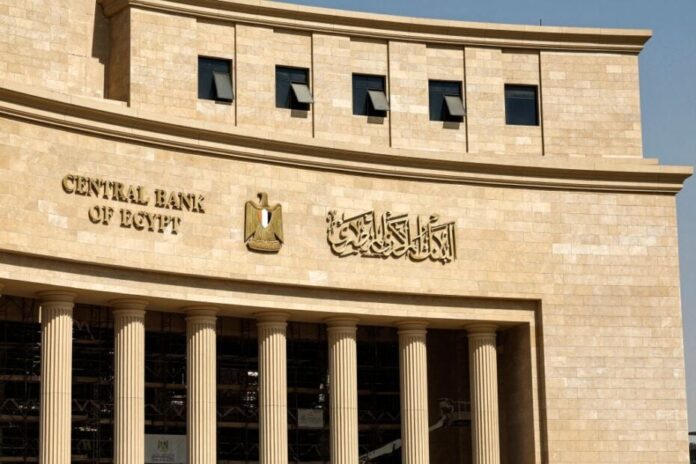
Egypt’s central bank as expected left its overnight interest rates on hold on Thursday, saying inflation pressures had subsided but that economic growth had softened.

The bank said in a statement that the lending rate remained at 28.25 per cent, while the deposit rate stood at 27.25 per cent.

It was the third time that it left rates unchanged since a 600 basis point (bps) hike on March 6, when it signed a $8bn financial support agreement with the International Monetary Fund.

All but one of 15 analysts polled by Reuters this week had expected rates to remain on hold, with a sole analyst predicting a 100 bps cut.

“With the gradual easing of previous shocks, inflationary pressures continued to subside, as annual headline and core inflation edged downward for the fifth consecutive month,” the central bank’s monetary policy committee (MPC) wrote in a statement accompanying the decision.

Egypt’s economy, already shaky, has been buffeted successively by the Covid-19 pandemic, Russia’s war in Ukraine and the war in Gaza.

Inflation dropped to 25.7 per cent in July, the first time the real interest rate has been positive since January 2022. Inflation fell gradually from an all-time peak of 38 per cent in September. August inflation figures are due on Tuesday.

“Domestically, real GDP growth softened to 2.2 per cent in Q1 2024 compared to 2.3 per cent in Q4 2023,” the MPC said.

“The softening is driven by declining public contribution to economic activity due to the impact of Red Sea maritime trade disruption on the service sector.”

The MPC said it expected economic growth to recover gradually in the fiscal year that began on July 1 and that inflation would decline significantly in the first quarter of 2025.

“The gradual unwinding of food inflation along with the improvement of inflation expectations suggest that inflation is currently on a downward trajectory,” it said.

UAE’s economy grew 3.4% in first quarter of 2024

0

The UAE’s economy grew 3.4 per cent year-on-year in the first quarter of 2024 to reach $117.1bn (Dhs430bn), according to the Federal Competitiveness and Statistics Centre, with non-oil GDP growing 4 per cent YoY during the period under review.

“The country adopted an innovative economic model that supports its future vision, along with effective national economic strategies, enhancing openness to the world, promoting partnerships, and transitioning towards an economic model based on flexibility and innovation,” Abdulla bin Touq Al Marri, the UAE Minister of Economy said in a statement.

Al-Marri emphasised that the growth reinforces achieving the economic objectives of the “We the UAE 2031” vision, which includes raising the country’s GDP to Dhs3tn by the next decade.

The preliminary data from the statistics authority shows that financial and insurance, trade activities and manufacturing were among the biggest contributors to non-oil GDP. The financial and insurance sector contributed 7.9 per cent to the UAE’s GDP growth, while trade activities made the largest contribution to the non-oil GDP at 16.1 per cent.

The transportation and storage sector experienced robust growth in Q1 2024, closely following the financial and insurance sectors, driven by a significant increase in air travel.

The country’s airports welcomed an impressive 36.5 million passengers in the January-March period, up 14.7 per cent from the corresponding period a year ago. Similarly, its maritime sector registered robust growth, with Dubai’s ports handling 3.7 per cent more containers and Abu Dhabi reporting a 36 per cent increase in cargo volumes.

Meanwhile, the International Monetary Fund said in that the UAE was experiencing robust economic growth, with overall real GDP projected to grow by about 4 per cent in 2024.

The fund said the strong foreign demand for real estate, increased bilateral and multilateral ties and the country’s safe haven status continue to drive rapid growth in housing prices and an increase in rents while adding to ample domestic liquidity.

GCC poised for strong growth in 2025: ICAEW report

0

The Gulf Cooperation Council (GCC) region is set for a sharp economic rebound, with growth expected to surge to 4.4 per cent in 2025, more than doubling from projected figures for 2024, according to the latest ICAEW Economic Insight report prepared by Oxford Economics.

The report forecasts that while economic growth in the broader Middle East is set to reach 2.1 per cent in 2024, it will accelerate significantly to 3.7 per cent by 2025.

The GCC’s non-energy sectors, including tourism, trade, and finance, are pivotal in driving this growth, with expectations of a 4.2 per cent expansion in 2024 and 4.4 per cent in 2025.

GCC’s diversification efforts to bear fruit

Scott Livermore, chief economist at Oxford Economics Middle East and ICAEW Economic Advisor, said the region’s strategic investment in non-oil sectors is bolstering resilience. “The GCC’s proactive and strategic investment, combined with a gradual recovery in oil production, is setting the stage for robust growth in 2025,” Livermore said.

Recent Purchasing Managers’ Index (PMI) data further supports this outlook, signalling strong domestic activity.

Anticipated interest rate cuts are also expected to boost consumption and private investment, enhancing the region’s diversification efforts.

Hanadi Khalife, head of Middle East at ICAEW, highlighted the region’s adaptability amid global and geopolitical challenges, stating, “The Middle East business community, supported by the accountancy profession, continues to demonstrate its ability to innovate and thrive in these conditions.”

GCC legal head earns average $21k a month

0

About 60 percent of legal professionals in the GCC received a pay rise last year with highest average salaries seen in Abu Dhabi and Qatar, a new survey has revealed.

The survey by legal search firm Elizabeth Williams Search, said many expat lawyers had no plans to leave the region, with a majority saying they feel optimistic about prospects for 2012.

It said salaries have held up well over the last year, with around 60 percent getting a pay rise last year and almost 80 percent expecting to get a 2011 bonus paid out this quarter.

The average salary for a head of legal was almost $21,000 a month (excluding bonus), the survey showed.

It added that salaries could be significantly more if the individual is fluent in written and spoken Arabic and qualified in a Western, common law jurisdiction.

The highest average salaries were generally seen in Abu Dhabi and Qatar, while respondents picked Dubai and Abu Dhabi as the most desirable places to work.

However, the poll showed that Qatar’s popularity increased significantly over the last year.

The survey also revealed that redundancies in the in-house legal sector have abated.

Previous surveys conducted by Elizabeth Williams Search showed a quarter of heads of legal were made redundant in 2009, 10 percent in 2010 and only 6 percent last year.

Just under half of the 205 heads of legal surveyed expect to recruit this year, the survey results showed.

Elizabeth Williams, managing director of Elizabeth Williams Search, said: “The executive search industry is a bellwether for the wider economy and the survey results confirm what we have been observing since mid 2010 and that is that optimism is returning to the market.

“The results also show that the region is perhaps not as transitory as people think, as a lot of lawyers want to remain here for as long as they can.”

Alonso survives first Dakar stage dominated by Minis

0

Dakar Rally debutant Fernando Alonso avoided any first stage pitfalls as the 2020 edition of motorsport’s gruelling 7,500 kilometre marathon began in Saudi Arabia on Sunday.

Alonso, trying to make history as the first Formula One champion to win the event, completed the drive from Jeddah to Al Wajh in his Toyota in 11th place.

The 38-year-old Spaniard, with five-time Dakar bike champion Marc Coma navigating, was over quarter of an hour behind surprise stage winner Vaidotas Zala.

The Lithuanian led home a 1-2-3 for Mini, 2mins 14sec clear of teammates Stephane Peterhansel, the 13-time Dakar champion, and Carlos Sainz.

Last year’s winner Nasser Al-Attiyah led the way for over 200km but he had to settle for fourth place after late mechanical problems with his Toyota.

Defending motorbike champion Toby Price won Sunday’s first bike stage.

The 32-year-old Australian KTM rider completed the 752km route over two minutes clear of American Ricky Brabec on a Honda with Austrian Matthias Walkner on another KTM in third.

Sharp increase in UAE residents’ spend on Valentine’s Day flowers

0

The overall spend on flowers in the UAE has increased by 146 percent compared to 2015, with the number of transactions growing by 158 percent, according to the Mastercard Love Index 2018, which analysed credit, debit and prepaid transactions across the past three Valentine’s Day periods from 11-14 February in 2015 to 2017.

While 86 percent of the transitions were made in person, e-commerce payments witnessed a 111 percent increase from Valentine’s Day 2015 to Valentine’s Day 2017.

“The increase in e-commerce transactions around Valentine’s Day points in the direction of a growing online shopping culture in the country, supported by the fast adoption of mobile payment solutions such as Masterpass, Apple Pay and Samsung Pay,” said Girish Nanda, general manager, UAE & Oman, Mastercard.

The share of spend on restaurants remained stable over the past three years, taking a 9 percent share of spend and a 44 percent share of transactions in 2017.

In addition, data from the study suggested 28 percent of UAE residents no longer wait until the last minute to buy gifts for the occasion, and made purchases on February 11 instead.

However, 28 percent also made purchases on Valentine’s Day itself.

Spend on flowers also increased by 96 percent since 2015, with the number of transactions increasing by 71 percent.

UAE execs set to see 6% salary rise in 2013

0

Salaries for those in the business sector are set to rise by up to six percent this year, almost double the projected GDP growth for the UAE, with senior investment bankers in Dubai set to earn up to AED150,000 ($40,839) per month, according a new report by a leading recruitment consultancy.

The UAE Salary Guide 2013, compiled annually by the Dubai-based office of global recruitment firm Morgan McKinley, estimated that despite the ongoing global economic issues, job opportunities across the main business sectors are set to grow by two to three percent, with average salaries projected to rise by five to six percent. This is nearly double the three percent GDP growth projected for the UAE this year.

“In the face of continued global economic pressures, the region continues to outperform most others. While reverberations from the eurozone crisis led to a subdued recruitment drive among UAE-based multinationals in 2012, confidence is returning as we tentatively tread away from global recession,” said Trefor Murphy, managing director of Morgan McKinley UAE.

“Staffing levels are steadily increasing and look set to continue in an upward trend. Growth sectors include financial services & banking, despite Moody’s downgrade of the three largest banks in the region. The manufacturing and retail sectors are also growing as consumer confidence in the region continues to build.”

The study looked at a number of sectors and outlined the average salary levels for those in a number of positions, from banking and financial services to accounting sales and marketing.

At the top end of the investment banking sector, senior managers working in the mergers and acquisitions arena are earning up to AED150,000 per month.

The levels were the same for senior chief investment officers and portfolio managers in the asset management area, while those in the retail and corporate banking side generally earned around less 30 to 40 percent less.

Accountants are also now in demand, with senior chief financial officers earning around AED65,000 per month and chief accountants earning up to AED40,000 in the same period.

The oil and gas sector is a major contributor to the UAE economy, with project managers earning up to AED50,000 per month and drilling engineers bringing home AED64,000 a month.