Home Blog Page 7

One in four UAE residents owe banks more than $68,000

0

More than a quarter of UAE residents have debts of more than $68,119 (AED250,000), according to a new survey by Arabian Business.

The UAE debt survey 2011, published in Arabian Business magazine today, reveals that more than 20% of residents have no idea how much debt they are in.

The survey also shows that nearly 40% of residents have personal loans of between $27,247 (AED100,000) and $54,495 (AED200,000).

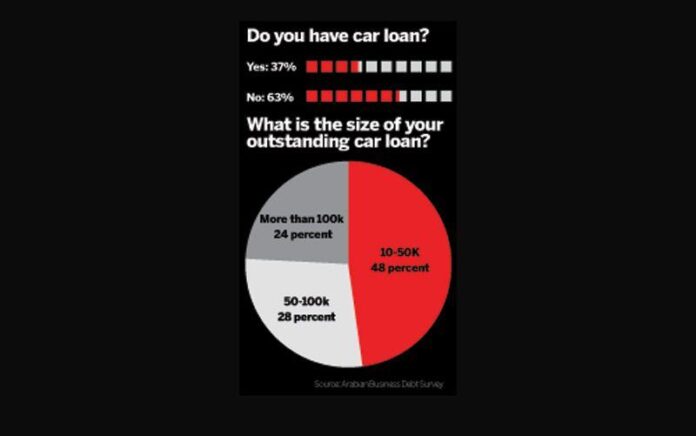
But the scale of UAE debt isn’t just concentrated on personal loans. The results show that 12% of residents in the country own more than six credit cards, with 15% of those still having outstanding balances of more than $27,247. The picture is even worse on car loans, where nearly a quarter of all UAE residents owe more than $27,247.

Last year a report by the Lafferty Group said total consumer debt across the GCC was $139bn, with the UAE having one of the highest take ups of credit cards anywhere on the planet, with 199.4 cards per 100 people.

*Arabian Business questioned 342 UAE residents for the debt survey.

Analysts are divided on how UAE’s lending market will evolve in the future

0

More than two years since the downturn, analysts are divided on how UAE’s lending market will evolve in the future.

Almost three years since the financial crisis, and UAE banks have learnt their lesson. The trend of chaotic consumption in the Gulf state, which once induced enviable rates of growth among the region’s leading lending institutions, has subsided, and seemingly banks are more than happy for things to stay that way. At least for the time being.

The reality of the situation can be seen in the Arabian Business debt survey. Asked whether they had a personal loan, and 62 percent of respondents said no. The results are as expected amid a prolonged period of banks reining in lending. Evidently, they suffered a rude awakening in 2009, when the global economic downturn not only exposed loose lending policies in the emirates, but a lack of a strong regulatory body. It was then that credit conditions toughened, leading to a ten percent decline in personal loans in the first quarter of the year, compared with the end of 2008, according to data from the central bank. The level of personal loans continued to shrink over the rest of the year, and by October 2010 loans to the private sector had been down for eleven months in a row.

Today, banks are still cautious. Yes, 38 percent of readers reported having a personal loan, but analysts say this could be due to high levels of lending among UAE nationals. “I would say that personal loan penetration is fairly low in the UAE, particularly among expats, though it may be higher among locals,” said Moody’s analyst John Tofarides.

“Most of the banks focus on lending to UAE nationals,” he added. “Expats tend to take out mostly auto loans, mortgages and credit cards, or borrow on collateral. Banks don’t like to give unsecured loans to expats, they would rather give them to nationals who work for the government and who are unlikely to lose their jobs.”

Given the circular released by the central bank at the beginning of this year, which capped personal loans at 20 times the salary or the monthly income of a borrower with a repayment period set at 48 months, many analysts feel that banks will maintain a conservative approach to retail lending, despite signs of revival and improved liquidity in the OPEC member’s banking system. “I don’t think we are going to see a rise in the number of personal loans after the circular that was sent out by the central bank in February,” said Tofarides. He added that we could potentially see a rise in commercial loans after the UAE Central Bank issued a statement to banks to lower interest rates in order to stimulate the economy.

Other analysts are more optimistic. In April, the general manager for consumer and elite banking at National Bank of Abu Dhabi Suvo Sarkar told Reuters he expected a steady increase in retail lending over the next five years. “[The year] 2009 was probably was the lowest in terms of numbers, up to mid-2010,” he told the newswire on the sidelines of a retail banking conference in Dubai. “But from the second half of 2010, we’ve seen a 15-20 percent pickup from those numbers and we see that continuing for sure.”

As for the amount people are borrowing, the Arabian Business debt survey revealed that the biggest amount was in the bracket AED100k-250k — with as many as 40 percent of borrowers. According to Tofarides this is fairly normal, with the central bank advising that lenders stay below the AED250k mark. “The amount of people borrowing above AED250k will be very small because the central bank has advised banks not to lend above that amount. If they do they have to report to the central bank.” He added: “Also, when banks lend money they take into account salaries. It therefore makes sense that the majority of loans are in this bracket.

Driving down car loan debt

0

With a population of just five million, the UAE is the world’s fourth biggest market for luxury brands like Rolls-Royce and the emirates’ roads are a firm favourite for gas guzzlers such as the Hummer, the Ferrari and the Maserati.

This all changed when the real estate bubble burst. The credit crunch took hold and job cuts became commonplace. Suddenly, the car became a symbol of excess and overindulgence. Many of those who could no longer afford their car loan repayments fled the country and cars, with keys and apologetic notes inside, were allegedly abandoned at the airport to gather dust.

Last year, General Motors — itself no stranger to debt issues — claimed over a third of applications for car finance were now being rejected by UAE banks.

“These are people walking into our showrooms and wanting to buy that new [car] and not being able to get financing,” Mike Devereux, outgoing managing director of GM Middle East operations told Arabian Business before heading for pastures new in Australia.

As the UAE economy begins to recover, an IHS Global Insight report has forecast sales of new cars are also on the rise again and are likely to increase to 240,000 this year, up from 210,000 in 2010 but still a lot lower than the 324,000 sold in the boom era of 2008.

Toyota, the world’s biggest automaker, accounts for 40 percent of all new car sales in the UAE and local agent Al Futtaim Motors says sales in the first four months of the year were up 45 percent year-on-year.

While sales are racing upwards, the results of an Arabian Business debt survey shows only 37 percent of respondents have a car loan and half of those have less than AED50,000 outstanding, a clear sign drivers appear to be more frugal and banks are still reluctant to finance that new speed racer.

“Stricter banking rules and higher interest rates will curb new car sales,” says Stephanie Vigier, senior market analyst at IHS Global Insight. “We think that it will be difficult to come back to the 2008 level as the government has learnt the lesson and will not open widely credits and car loans.”

The government has indeed learnt its lesson and has introduced changes to the terms allowed for new car loans. Borrowers must now have a minimum monthly salary of AED5,000 ($1,361) — 66 percent more than during the boom era — and must already have 20 percent of the value of the car as a down payment.

In 2009, hundreds of bank customers were leaving UAE without settling their debts.

0

We’ve all been there. it gets to the end of the month, the funds in the current account are getting a little low and you turn to the credit card to meet the shortfall; that is after all what credit cards are for.

Is this how consumers in the UAE use their credit cards? Judging from the fact that fifteen percent of respondents to this year’s Arabian Business debt survey admit they have more than AED100,000 ($27,224) outstanding on their credit cards, it might not be the case.

The UAE has one of the world’s highest credit card penetration rates with 199.4 cards per 100 adults in 2008 — the most recent data available. That’s a more than threefold increase from 62 cards per 100 adults in 2003.

The Gulf state’s five-year property boom fuelled borrowing and credit card spending but it wasn’t until the global economic crisis hit that its borrowing excesses were revealed. At the height of the country’s debt crisis in 2009, UAE lenders said they were seeing up to 2,500 customers leave the country every month without settling their debts.

Banks were forced to curb their lending and increase their interest rates in light of the downturn while the UAE Central Bank in February introduced several measures to reduce consumer’s access to credit.

Today, some two years later, the economic outlook for the UAE is very different. The country’s position as a safe haven amid the regional turmoil combined with rising oil prices and increased confidence in the economy is boosting the number of credit cards in circulation and the amount of money that is being spent on plastic.

This is evident in this year’s debt survey. Around 62 percent of those polled say they own between one and three credit cards compared to eight percent with between four and six cards and twelve percent who have more than six credit cards. Eighteen percent say they don’t own any.

The majority of respondents (49 percent) say they have less than AED10,000 outstanding on their credit cards, 26 percent have AED10-15,000 while ten percent say it is AED50-100,000.

This is in spite of the fact that UAE lenders charge some of the highest interest rates for their credit cards in the region. Interest rates range between 2.25-2.99 percent in the UAE compared to 1.6-2 percent in Saudi Arabia, 1.5 percent in Qatar and Kuwait and 1.74-1.83 percent in Bahrain, according to a January study by Al Khaleej.

It’s little wonder that the likes of Visa and MasterCard are ramping up their expansion plans in the region. In April, the electronics payment giant Visa opened its new headquarters in Dubai in a bid to capture a larger slice of the pie.

“The Middle East is one of the fastest growing regions for Visa worldwide, and we continue to invest and build our presence here,” Elizabeth Buse, Visa’s group president for Asia Pacific, Central Europe, Middle East, and Africa said at the official launch.

MasterCard, the world’s second biggest payments process, is also following suit. Last month its general manager told Arabian Business it was seeing double digital growth across the region.

“We’re definitely growing in high double digits, even this year. Our market share seems to be improving in most markets across the Middle East,” said Raghu Malhotra, GM of MasterCard Worldwide Middle East.

“The one thing we have noticed in markets across the Middle East is that they are very resilient. They bounce back very quickly and go back to exactly the same point that they left off,” he added. It certainly looks that way.

The GCC economies may be back on track, but for many residents, worries over personal finance remain

0

The story of expatriates trapped in Gulf countries by a rising tide of debt and lost job opportunities became apocryphal during the course of the financial crisis. As the GCC states dropped gears — some more than others — foreign workers found themselves heading for the airports.

Last year, Arabian Business devoted an entire issue to the subject of personal debt, finding that GCC residents had splurged out on an astonishing $155bn spending spree by 2008. And while Gulf countries are now largely back on track, with restructuring of many major companies now complete, the issue has still not gone away. Earlier this year, international media made much of expatriates trapped in Bahrain by personal debt, despite the local unrest in the country.

But it’s not just expats who are feeling the pinch. In a recent survey by Asda’a Burson-Marsteller, the rising cost of living is the number one concern for youth across the Middle East and Africa, rated as more important than domestic instability, unrest and access to clean water. Nearly half (47 percent) of respondents to that survey said that they were “very concerned” about personal debt, up from 30 percent the year before.

This year, Arabian Business has published its first ever debt survey, which gives the inside track on how much Gulf residents owe and their concerns over being detained. One of the more astonishing results of our survey showed that almost a quarter (22.5 percent) of respondents don’t even know exactly how much cash they owe their banks.

Perhaps worse, just over a quarter (26.5 percent) owed AED250,000 or more in personal loans, car loans and credit cards. That is over $68,000. This clearly shows that the debt hangover suffered during the boom period has not yet cleared for many GCC residents, who are still working to pay off huge credit overhangs.

However, while that tranche of debt still remains, what certainly has changed is consumer spending habits, which are a fraction of what they once were. According to a report issued earlier this year by Nielsen, concerns over job security and worries over the current health of the economy have led to customers tightening their purse-strings.

“Consumer spending is still nowhere near its pre-recession levels in the UAE, with many opting to allocate any remaining income, after covering essential living expenses, to savings (46 percent) and paying off debt (30 percent),” said Sevil Ermin, Nielsen’s UAE managing director. “UAE consumers continued their pragmatic behaviour with coping strategies that combine both essential and discretionary spending.”

On the other side of the coin, fully 30 percent of respondents said that they had either no debt, or less than AED10,000 ($2,733). Two percent fell into the AED200,000-250,000 bracket, with 5.5 percent in the AED150,000-200,000 category. Around fifteen percent said that they owed between AED10,000-50,000. Taken in total, some 70 percent of respondents said that they had debts worth over AED10,000 — and all this in a region where expatriates come to work in order to save money, rather than spending it, and where local residents are supported extensively by their national governments.

Still, local authorities have certainly made some changes in the last year. In a slew of announcements made this year, the UAE central bank capped personal loans at 20 times the salary or monthly income of borrowers and banned cold calling from banks trying to sell credit cards. Some banks have argued that the move has restricted their ability to garner greater revenues, but the decision hopefully points towards a future in which lending is infinitely more responsible.

Who’s to blame for your bad debts?

0

Do you ever get the feeling that everyone around you is having a better life? They drive a nicer car, live in a bigger apartment, always dress in designer clothes, and never look at the right-hand side of a menu. And to really rub salt in the wound of jealousy, they probably earn less than half of what you do.

So how can they afford such a lavish lifestyle? Were they just born rich? Do they have substantial savings? Or are they just much better when it comes to money?

Our UAE debt survey this week suggests the answer is none of the above. The truth, which I have long suspected, is that a huge number of people are living way beyond their means, raking up staggering amounts of debt which they have no intention or ability to ever pay back. And they are still at it. If you don’t believe me, check out the survey results, some of which are mind- blowing. More than one in five people don’t even have a clue how much money they owe. And a staggering 26.5 percent owe more than $68,000. When it comes to car loans, 24 percent — nearly one in four — still have more than $27,000 to pay off, and twelve percent of us own more than six, yes six, credit cards. This ties in with the findings of the Lafferty Group which last year said total consumer debt across the GCC was $139bn, with the UAE having one of the highest ratios of credit cards on the planet, with 199.4 cards per 100 people.

So who is to blame? Yes, I know, it’s all the fault of those horrible banks who forced you to take a $68,000 personal loan. Then the next day, they helped you move into a fabulous penthouse overlooking the sea, stopping off along the way at Dubai Mall to help you carry that fantastic 68 inch wide-screen TV into your house. And just to make sure you didn’t forget to pop into the bank and pay them back every month, they helped you buy a new sports car. But you still did it, didn’t you?

I am no defender of banks in the region, and I have no qualms in saying that many of them are guilty of over aggressive lending tactics. Sometimes, during the boom years, these were nothing short of disgraceful. And for many people who have tried to resolve their problems through dialogue with the banks, the process has been futile. Banks can and should do more. But ultimately, everyone now in huge debt once had a choice to make. Take the money and spend it, or try and live within their means.  I don’t buy the argument that rents were rising so fast, you had to borrow to survive. In most cases, salaries also rocketed.  Blame the banks, blame the system, blame the economy. Blame everyone you want to, but the numbers don’t lie: most people in debt have only themselves to blame.

Why is everyone resigning?

Summer. Here we come, time for long holidays, putting your feet up, recharging your batteries and looking forward to Q4. Just skip over Q3.

Not quite, at least not in the UAE. Is it just me or has anyone else noticed the wave of high-level changes taking place across some of the biggest companies in the emirates? Yousef Omair Bin Yousef, CEO of Abu Dhabi National Oil Company (ADNOC) — resigned. Abdulla Saif Al Nuaimi, CEO of Abu Dhabi Energy Company (TAQA) — resigned. Marc Dardenne, CEO of Emaar Hospitality — resigned. Chris O’Donnell, CEO of Nakheel — resigned. Let’s not forget also Sheikh Ahmed, chairman of Emirates Airline, now also taking on the role of chairman of Emirates NBD. I don’t think any one of these is in any way related, and apart from Chris O’Donnell, none of the departures appear to be acrimonious. But what it does signal is major changes at the top. Yes, the UAE economy, according to independent forecasts, will grow by over three percent this year. Yet the continued failure of the property market to pick up means that fears of a double-dip recession cannot be totally discounted.

We could, in the coming months, still face massive economic challenges. Putting in place new teams to face up to them may not be such a bad idea.

UAE residents fearful over lack of savings

0
DUBAI, UNITED ARAB EMIRATES - DECEMBER 03: Women ride an escalator in the huge shopping complex 'Mall of the Emirates' on December 3, 2009 in Dubai, United Arab Emirates. Stock markets in Dubai and Abu Dhabi fell sharply this week after state owned company Dubai World asked for more time to pay off debts amounting to £35 billion. The Dubai economy which has enjoyed years of rapid growth has seen a sharp decline recently as world markets reacted to the global economic crisis. (Photo by Dan Kitwood/Getty Images)

Rising costs and efforts to pay off loans are among the reasons why almost nine out of every ten residents are worried about not saving enough, according to a new report.

A survey carried out by National Bonds Corporation showed that 46 percent of the population saved less than they had originally planned.

Nearly three quarters of respondents (71 percent), admitted that they do not save regularly, with just under a tenth saying they did not save at all. Of the latter figure, most blamed higher expenses and loans for their inability to save.

Breaking the data down by nationality, the survey found that UAE nationals and Western expats are saving less than in 2010, while Asian and Arab expats are saving more.

From those who do save, 64 percent say the sum is less than a fifth of their income. Among UAE nationals and Arab expats, 40 percent say they save less than a tenth of their income. National Bonds said that overall trends show that Westerners and Asians save larger amounts than others.

Respondents to the survey also revealed that they are spending more money than last year on various areas. Four in six said they were paying more for transportation – reflecting the rise in petrol prices in the UAE – while 58 percent indicated that groceries were more expensive.

Showing the difference between the various emirates in the UAE, Sharjah residents claimed they were spending more on necessities such as groceries, household items and education. However, Abu Dhabi residents indicated that they were paying increased amounts for eating out and  luxury retail.

The research was carried out by YouGov Siraj using a sample of 501 respondents.

National Bonds said that the survey was helping it plan a nationwide ‘financial education roadshow’, which aims to help various sectors of the UAE community manage its spending and plan savings.

Billionaire’s playground

0
Emirati men walk past Burj Dubai, the world's tallest tower, on January 04, 2010. Once-bustling Dubai will open the world's tallest skyscraper boasting new limits in design and construction, hopeful of polishing an image tarnished by the debt woes afflicting the Gulf emirate. Emaar, the giant property firm part-owned by the government and which developed the needle-shaped concrete, steel and glass structure, has declined to reveal Burj Dubai's exact height. AFP PHOTO/KARIM SAHIB (Photo credit should read KARIM SAHIB/AFP/Getty Images)

Fast cars, designer clothes and flashy lifestyles are nothing new to the Middle East. Record high oil prices have been boosting regional wealth for years and none more so than in Saudi Arabia, which was last week recognised as having the world’s highest proportion of ultra high net worth (UHNW) households.

Every eighteen households per 100,000 in Saudi Arabia have more than $100m of assets under management, The Boston Consulting Group (BCG) said in its annual report on global wealth. The world’s largest oil exporter topped households in Switzerland (ten households) and Hong Kong (nine households) in this year’s list. Saudi Arabia isn’t alone. Three other Gulf states, Kuwait, Qatar and the UAE, all appear in the top ten, ranked at fourth, seven and tenth in the world, respectively. Not to be left in the shadows is the region’s millionaire households or those with assets of $1m or more. Qatar has the world’s third highest concentration of millionaires by market share, behind Singapore and Switzerland, while Kuwait and the UAE come in at fifth and six, respectively.

“Given the demographics and overall wealth of these petroleum-rich countries we would expect a higher proportion of UHNW households than in other parts of the world. Growth in assets under management also reflects the strong fundamentals of the region, driven by continuing strong petroleum prices,” says Dr Sven-Olaf Vathje, partner and managing director at The Boston Consulting Group, Middle East.

Gulf states weren’t the only countries that saw their assets under management swell in size. Global wealth increased eight percent to $121.8 trillion in 2010 with the strongest growth in Asia Pacific (excluding Japan) and the Middle East and Africa, according to BCG.

The USA topped this year list for number of households with more than $100m of assets under management (2,692) as well as the highest proportion of millionaire households in the world (5,220). In 2010, Japan ranked second in terms of millionaires per 1,000 households while Germany came in second in terms of number UHNW households globally.

If this year’s wealth report is anything to go by, the economic downturn — at least for the super rich — was just a blip. Global assets are set to increase at a compound rate of six percent over the next several years as most economies move out of recession and emerging markets ramp up their infrastructure spending plans.

Wealth in the Middle East and Africa is expected to reach $6.7 trillion by 2015, says BGC. The Gulf’s aggressive economic plans coupled with its vast oil wealth are expected to be the two biggest drivers of household wealth. Oil prices, the backbone of the Gulf’s economy, have increased over 54 percent to $114 a barrel in the last year, in spite of a small decline in April due to the political turmoil.

Large family-owned conglomerates — some of the biggest employers in the region — are set to become the biggest beneficiaries of government spending sprees, predicts Markus Massi, partner and managing director of The Boston Consulting Group, Middle East. “The underlying economic development — meaning all of the investment with the government that has already started — [will be a driver]. Most of the HNWI have private corporations, which obviously will benefit from that investment activity so a lot of the wealth will be created through economic development,” he explains.

Female wealth, which accounted for 22 percent of the assets under management in the Middle East last year, is significant, says BGC. Female investors in the region ranked fifth globally in terms of wealth, holding around $0.7 trillion in assets under management and not far behind their counterparts in North America (where women hold 33 percent of the total wealth), Australia and New Zealand (31 percent), Asia (29 percent) and Western Europe (26 percent).

The majority of this female wealth might be the result of family ties but that certainly doesn’t mean women are resting on their laurels. Wealthy Middle Eastern women are particularly savvy when it comes to structuring their investment portfolios, often choosing to take on a greater role with their wealth managers than their male counterparts, says Massi.


Ex-UAE ambassador named UK’s wealthiest Arab

0

The former UAE ambassador to Britain has been named as the top-ranked Arab in a Sunday Times list of the 1,000 wealthiest people in the UK.

Mahdi al Tajir, the owner of bottled water supplier Highland Spring, saw his wealth leap £50m ($81m) over 12 months to £1.5bn, making him the 38th richest person in the UK.

The 79-year-old, whose companies include Park Hotels and Drift Properties, also topped the list of Scotland’s richest residents, the rankings showed.

Former ambassador Mahdi al Tajir in at No.38, India’s Lakshmi Mittal tops Rich List.

The former UAE ambassador to Britain has been named as the top-ranked Arab in a Sunday Times list of the 1,000 wealthiest people in the UK.

Mahdi al Tajir, the owner of bottled water supplier Highland Spring, saw his wealth leap £50m ($81m) over 12 months to £1.5bn, making him the 38th richest person in the UK.

The 79-year-old, whose companies include Park Hotels and Drift Properties, also topped the list of Scotland’s richest residents, the rankings showed.

The title of richest UK resident was taken by steel tycoon Lakshmi Mittal, who took the top slot for a seventh year with an estimated net wealth of £17.5bn. Alisher Usmanov, the billionaire shareholder of Russian iron-ore producer Metalloinvest, came in second after adding £7.7bn to his net worth in a year. [To see the top 5 wealthiest people in the UK, click here.]

The cumulative wealth of the UK’s 1,000 richest families and individuals rose to £395.76bn during the year. The total fell short of the record £413bn reached in 2008, according to the rankings compiled each year by Philip Beresford.

The number of billionaires on the list rose 20 to 73, two short of the record of 75 set in 2008.

The list has been compiled for the past 22 years and is based on identifiable wealth, including property, art, racehorses and shares in publicly-held companies. It excludes bank-account balances.

The year before, the net worth of those on the list had risen at a record pace, rising 30 percent to £333.5bn as the country’s richest residents recovered from the global financial crisis.

Also named in the rankings was Egyptian-born Mohamed Al Fayed, the retail billionaire who sold his London department store Harrods to Qatar Holdings in a deal estimated at £1.5bn.

The 82-year-old chairman of Fulham Football Club has added £650m to his net worth over the last 12 months, leapfrogging him 48 places to No.46 with an estimated wealth of £1.3bn.

Holding his rank of No.67 for a second year is Nadhmi Auchi, the Bagdad-born head of General Mediterranean Holding.  The 73-year-old has an estimated net worth of £1bn, bolstered by GMH’s widespread interests in the Middle East. The businessman has seen £200m wiped off his wealth this year, as regional unrest takes a toll on his interests.

Also sharing the No.67 spot with a $1bn net worth is Syrian-born Wafic Said. The former financier sold a collection of the Duchess of Windsor’s jewels for nearly £8m last year, and counts houses in London, Paris, Marbella and Monaco among his assets. A philanthropist, he has donated more than £36m to Said Business School in Oxford.

Tamweel’s return to have little impact on market – analysts

0

UAE mortgage provider Tamweel’s return to lending after a two-year freeze will have little impact on the country’s real estate market, analysts have said.

The size of the UAE’s real estate market as well as Tamweel’s anticipated stricter lending criteria will stifle any boost the mortgage provider’s return to business might bring, said analysts polled by Arabian Business.

“If you look at the size of the UAE real estate market, especially Dubai’s, it won’t significantly impact the market,” Mohamed Junaid Bray, research analyst at Abu Dhabi Commercial Bank (ADCB), said.

Tamweel announced a return to lending Monday after it froze operations in 2008 due to the impact of the global financial crisis. The Islamic mortgage provider said it will offer up to 80 percent financing on finished residential properties in Dubai and Abu Dhabi.

Bray forecast that Tamweel’s lending criteria would be stricter than in 2008, which would also limit any positive impact on the property sector.

Meanwhile, Dean Biddulph, senior financial consultant of Independent Finance, said the mortgage provider would implement a stringent lending policy.

“They will probably be pretty strict on who they take on. They probably won’t lend on high-end value, but I think they will be stricter then what they were in the past,” he said.

“I don’t think it’s going to make a major, major difference because there are other banks lending at the moment quite aggressively,” he continued. “Most of the other lenders are offering much better products than what Tamweel has offered in the past.

“I don’t think they will come back and offer better deals than what the other lenders are offering.”