
Home Blog Page 29

Explainer: What would Japanese intervention to boost a weak yen look like?

0
 Japanese authorities are facing renewed pressure to combat sharp declines in the yen, as traders drive down the currency on expectations the interest rate differentials between Japan and the United States will remain wide.
Below are details on how yen-buying intervention works:

LAST CONFIRMED YEN-BUYING INTERVENTION?

Tokyo spent 9.8 trillion yen ($61 billion) intervening in the foreign exchange market in end-April and early May, after the Japanese currency hit a 34-year low of 160.245 per dollar on April 29.
The move helped keep the yen from falling below the psychologically important 160 mark until Wednesday, when it sank to a nearly 38-year low of 160.82 as traders renewed their focus on the U.S.-Japan interest rate gap.

WHY STEP IN?

Yen-buying intervention had been rare. More often, the Ministry of Finance has sold yen to prevent its rise from hurting the export-reliant economy by making Japanese goods less competitive overseas.
But yen weakness is now seen as problematic, with Japanese firms having shifted production overseas and the economy heavily reliant on imports for goods ranging from fuel and raw materials to machinery parts.

WHAT HAPPENS FIRST?

When Japanese authorities escalate their verbal warnings to say they “stand ready to act decisively” against speculative moves, that is a sign intervention may be imminent.
Rate checking by the Bank of Japan – when central bank officials call dealers and ask for buying or selling rates for the yen – is seen by traders as a possible precursor to intervention.

WHAT HAPPENED SO FAR?

Japan’s top currency diplomat Masato Kanda said on Wednesday authorities were “seriously concerned and on high alert” about the yen’s decline, which he described as driven by speculators.
He also said Tokyo was “preparing to act” against excessive volatility, signaling readiness for another intervention.
The jawboning has failed to reverse the weak-yen tide with the Japanese currency hovering at 160.68 to the dollar in Asia on Thursday. The yen has also fallen sharply against other currencies such as the euro.

CHANCE OF INTERVENTION?

Authorities say they look at the speed of yen falls, rather than levels, and whether the moves are driven by speculators, to determine whether to step into the currency market.
The yen’s fast-pitch decline below the key 160-to-the-dollar level is heightening market alarm over the chance of imminent yen-buying intervention.
“At this point, authorities are probably starting to worry not just about the speed but the level,” Masafumi Yamamoto, chief currency strategist at Mizuho Securities, said in a research note. “Unless they intervene, there’s a risk the yen will slide toward 162.”

WHAT’S THE TRIGGER?

The decision is highly political. When public anger over the weak yen and a subsequent rise in the cost of living is high, that puts pressure on the administration to respond. This was the case when Tokyo intervened in 2022.
Prime Minister Fumio Kishida may feel the need to prevent further yen falls from pushing up the cost of living with his approval ratings faltering ahead of a ruling party leadership race in September.
But the decision would not be easy. Intervention is costly and could easily fail, given that even a large burst of yen buying would pale next to the $7.5 trillion that change hands daily in the foreign exchange market.

HOW WOULD IT WORK?

When Japan intervenes to stem yen rises, the Ministry of Finance issues short-term bills, raising yen it then sells to weaken the Japanese currency.
To support the yen, however, the authorities must tap Japan’s foreign reserves for dollars to sell for yen.
In either case, the finance minister issues the order to intervene and the BOJ executes the order as the ministry’s agent.

CHALLENGES?

Japanese authorities consider it important to seek the support of Group of Seven (G7) partners, notably the United States, if intervention involves the dollar.
Finance leaders of the G7 advanced nations last month reaffirmed their commitment to warn against excessively volatile currency moves, language Japan sees as a green light to intervene in the market.
Earlier this month, the U.S. Treasury added Japan to a foreign exchange “monitoring list” in its semi-annual currency report.
While the step did not take into account Tokyo’s latest intervention, it said “Treasury’s expectation is that in large, freely traded exchange markets, intervention should be reserved only for very exceptional circumstances with appropriate prior consultations.”
There is no guarantee intervention will effectively shift the weak-yen tide, which is driven largely by expectations of prolonged low interest rates in Japan.
The BOJ has been dropping signals its quantitative tightening (QT) plan in July could be bigger than markets think, and may even be accompanied by a rate hike.
But the hawkish hints have failed to give the yen much boost, as any increase in the BOJ’s current near-zero short-term policy target will still keep Japan’s borrowing costs very low.
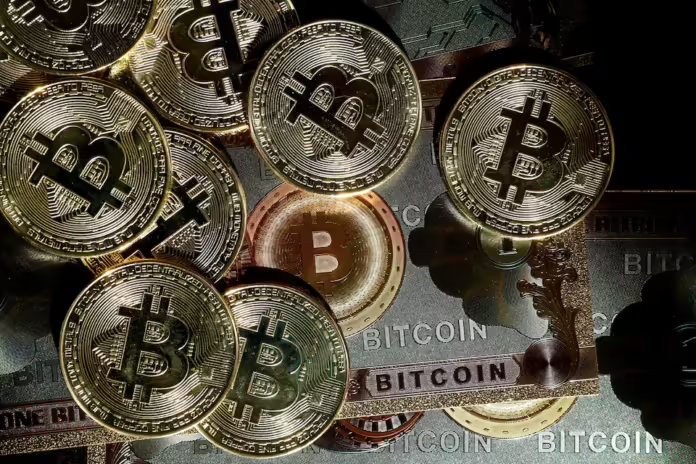
Crypto ‘re-staking’ platforms boom as traders chase bigger returns

0
 More than $18 billion worth of cryptocurrency has moved into a new type of platform which offers investors rewards in exchange for locking up their tokens, in a complex scheme that analysts warn poses a risk for users and the crypto market.
The soaring popularity of so-called “re-staking” is the latest sign of risk-taking in crypto markets as prices rally and traders hunt for yield. Bitcoin , the biggest cryptocurrency, is near all-time highs while ether , the second biggest, is up more than 60% this year.
At the heart of the re-staking boom is Seattle-based start-up EigenLayer. The company, which in February raised $100 million from U.S. venture capital firm Andreessen Horowitz’s crypto arm, has attracted $18.8 billion worth of crypto to its platform – up from less than $400 million six months ago.
EigenLayer invented re-staking to expand a long-standing crypto practice called staking, its founder Sreeram Kannan told Reuters.
Blockchains are a kind of database, which involve many computers in a network checking and confirming who owns which cryptocurrencies. To do this, owners of crypto tokens, such as ether, allow their assets to be locked up as part of the validation process. Holders lose instant access to their tokens for as long as they participate in staking but they earn a yield in return.
Some staking platforms also give users newly-created cryptocurrencies to represent the cryptocurrencies they have staked. Re-staking enables owners to take those new tokens and stake them again with different blockchain-based programmes and applications in the hope of bigger returns.
The crypto world is divided as to how risky re-staking is, with some insiders saying the practice is too nascent to know.
But others, including analysts, fear that if new tokens representing the re-staked cryptocurrencies are used as collateral in crypto’s vast lending markets, there could be endless loops of borrowing based on a small number of underlying assets. That could destabilise broader crypto markets if everyone tried to exit simultaneously, they say.
“When there’s anything that has collateral on collateral it’s not ideal, it adds a new element of risk that wasn’t there,” said Adam Morgan McCarthy, research analyst at crypto data provider Kaiko.
The appeal for investors is the yield: returns from staking on the Ethereum blockchain are typically in the 3%-5% range but analysts say returns could be higher for re-staking, as investors can earn multiple yields at once.
Re-staking is the latest development in the risky world of decentralised finance, or DeFi, in which cryptocurrency holders invest in experimental schemes in the hope of generating large returns on their holdings without having to sell them.
The EigenLayer platform is yet to pay out staking rewards directly to users, however, because the mechanism for doing so has not been developed. Users are joining the platform in anticipation of future rewards, or other giveaways known as airdrops.
For now EigenLayer has been giving out its own newly-created token to people who use the platform. Users hope this token called, “EIGEN”, will be worth something in future.
Kaiko’s Morgan McCarthy said the growth of re-staking platforms was fuelled by users seeking such airdrops, calling it “really, really speculative, this free money thing.”
“It’s very risky,” said David Duong, head of research at U.S. crypto exchange Coinbase (COIN.O), opens new tab, which offers staking but not re-staking.
“They’re doing this pre-emptively right now, (with the) expectation that they will be rewarded with something but they don’t know what,” Duong said.
Reuters Graphics
Reuters Graphics

ENTER EIGENLAYER

EigenLayer was launched last year by Sreeram Kannan, a former assistant professor at the University of Washington in Seattle and part of a team that launched the first student-designed micro-satellite in India, according to his academic website.
EigenLayer describes itself as a marketplace for validation services, connecting would-be stakers with applications which need staked tokens.
New re-staking platforms have emerged, including EtherFi, Renzo and Kelp DAO, which re-stake clients’ tokens on EigenLayer for them and generate new tokens to represent those re-staked assets. These tokens can be used elsewhere, for example as collateral in borrowing.
Kannan said his platform’s aim is to allow users to choose where to stake their tokens and to help new blockchain services grow, not to incentivise ever more crypto-backed borrowing.
“We don’t have any official relationships with any of these players…This is an emergent phenomenon,” he said.
Coinbase’s Duong says re-staking could come with “hidden risks” – if re-staking tokens are used in crypto lending there could be forced liquidations and more volatility during market downturns, he wrote in a note.
The 2022 selloff in crypto markets was exacerbated by high-risk lending, as crypto tokens used as collateral quickly lost their value following the collapse of the Terra and Luna tokens.
Kannan distances EigenLayer from the risks.
“The risk isn’t in re-staking but rather it’s in the lending protocols. The lending protocols are mispricing risk,” he said.
Some experts are unconcerned about re-staking, noting that the cash in re-staking protocols is tiny relative to the global crypto industry’s $2.5 trillion in net assets.
Regulators have long been concerned about losses in the crypto world spilling over to wider financial markets.
“For now, we do not see any meaningful risk of contagion from restaking issues to traditional financial markets,” said Andrew O’Neill, digital assets analytical lead at S&P Global Ratings.
Still, the crypto world is becoming increasingly connected to mainstream finance, and re-staking is catching on with institutional investors.
Standard Chartered crypto’s arm, Zodia Custody, has seen significant institutional interest in staking but considers re-staking a step too far because it is difficult to establish a “paper trail” of where the assets go and how rewards are apportioned, Chief Risk Officer Anoosh Arevshatian said.
Nomura’s crypto arm, Laser Digital, has partnered with Kelp DAO to re-stake some of its funds, Kelp DAO said in an April blog post. Laser Digital did not respond to a Reuters comment request.
Swiss crypto-focused bank Sygnum said it stakes clients’ crypto assets and expects “a new ecosystem around re-staking to emerge”.

The Evolution of Digital Banking: What to Expect Next

0

History of Digital Banking

Digital banking has evolved significantly since the advent of online banking in the 1990s. Initially, online banking allowed customers to perform basic transactions like checking account balances and transferring funds. Over time, advancements in technology have expanded digital banking services, offering a wide range of financial products and personalized experiences.

Current State of Digital Banking

Today, digital banking encompasses various services, including mobile banking apps, digital wallets, online lending platforms, and robo-advisors. Key features of modern digital banking include:

  1. Convenience: Customers can access banking services 24/7 from anywhere, using smartphones, tablets, and computers.
  2. Personalization: Advanced data analytics enable banks to offer personalized financial advice and products tailored to individual needs.
  3. Efficiency: Digital banking streamlines processes, reducing the need for physical branches and manual paperwork, leading to cost savings and faster service delivery.
  4. Security: Enhanced security measures, such as biometric authentication and encryption, protect customer data and transactions.

Emerging Technologies in Digital Banking

Several emerging technologies are set to further transform digital banking:

  1. Artificial Intelligence (AI): AI-driven chatbots and virtual assistants can provide instant customer support and personalized financial advice.
  2. Blockchain: Blockchain technology can enhance security, transparency, and efficiency in banking transactions, particularly in cross-border payments and identity verification.
  3. Open Banking: Open banking initiatives, supported by regulations like PSD2 in Europe, allow third-party developers to access bank data, fostering innovation and competition in financial services.
  4. Internet of Things (IoT): IoT devices, such as smartwatches and voice-activated assistants, are enabling new ways for customers to interact with their banks and manage their finances.

Future Trends in Digital Banking

Several trends are likely to shape the future of digital banking:

  1. Hyper-Personalization: Banks will leverage big data and AI to offer hyper-personalized experiences, tailoring products and services to individual preferences and behaviors.
  2. Embedded Banking: Banking services will become increasingly integrated into non-financial platforms, such as e-commerce websites and social media, offering seamless financial experiences.
  3. Sustainability: Digital banks will prioritize sustainability, offering green financial products and services that support environmental goals.
  4. Financial Inclusion: Digital banking will play a crucial role in enhancing financial inclusion, providing access to banking services for underserved and unbanked populations globally.

Challenges and Opportunities

The evolution of digital banking presents both challenges and opportunities:

Opportunities:

  1. Innovation: Digital banking fosters innovation, allowing banks to develop new products and services that meet changing customer needs.
  2. Customer Engagement: Enhanced digital experiences can improve customer engagement and satisfaction, building stronger relationships.
  3. Cost Efficiency: Digital banking reduces operational costs, enabling banks to offer competitive pricing and improved services.

Challenges:

  1. Cybersecurity: The increasing reliance on digital channels heightens the risk of cyberattacks, requiring robust security measures and continuous vigilance.
  2. Regulatory Compliance: Navigating complex and evolving regulatory environments can be challenging for digital banks, necessitating ongoing compliance efforts.
  3. Technology Integration: Integrating new technologies with legacy systems can be complex and costly, requiring significant investment and expertise.

Conclusion: Embracing the Future of Digital Banking

The future of digital banking promises to deliver more personalized, efficient, and secure financial services. By embracing emerging technologies and trends, banks can enhance customer experiences, drive innovation, and achieve sustainable growth. However, addressing challenges related to cybersecurity, regulatory compliance, and technology integration will be crucial for success. As digital banking continues to evolve, staying ahead of the curve will be key for financial institutions looking to thrive in the digital age.

Analyzing the Global Real Estate Market: Hotspots and Trends

0

Overview of the Global Real Estate Market

The global real estate market encompasses residential, commercial, and industrial properties, each influenced by economic conditions, demographic trends, and regional factors. Understanding the dynamics of this market is crucial for investors looking to capitalize on opportunities and mitigate risks.

Current Hotspots for Investment

Several regions are currently considered real estate investment hotspots due to their economic growth, urbanization, and demand:

  1. Southeast Asia: Countries like Vietnam, Thailand, and Indonesia are experiencing rapid urbanization and economic growth, driving demand for residential and commercial properties.
  2. Eastern Europe: Cities like Warsaw and Budapest offer attractive investment opportunities due to economic growth, increasing foreign investment, and relatively lower property prices.
  3. North America: Major cities in the US and Canada, such as Austin, Toronto, and Seattle, continue to attract investment due to strong economic fundamentals, technological innovation, and population growth.
  4. Middle East: Cities like Dubai and Riyadh are investing heavily in infrastructure and diversifying their economies, making them attractive for real estate investment.

Emerging Trends

Several emerging trends are shaping the global real estate market:

  1. Sustainability: There is increasing demand for sustainable and energy-efficient buildings, driven by environmental concerns and regulatory requirements.
  2. Technological Integration: Smart buildings equipped with advanced technologies for security, energy management, and connectivity are becoming more prevalent.
  3. Co-Living and Co-Working: Shared living and working spaces are gaining popularity, particularly among millennials and remote workers, offering flexible and cost-effective solutions.
  4. Urbanization: Rapid urbanization in developing countries is driving demand for residential and commercial properties, creating opportunities for investors.

Risks and Opportunities

Investing in the global real estate market presents both risks and opportunities:

Opportunities:

  1. High Returns: Real estate investments can offer significant capital appreciation and rental income, particularly in high-growth regions.
  2. Diversification: Real estate provides portfolio diversification, reducing overall investment risk.
  3. Inflation Hedge: Real estate is often considered a hedge against inflation, as property values and rents tend to increase with inflation.

Risks:

  1. Market Volatility: Economic downturns, interest rate changes, and geopolitical events can lead to market volatility and impact property values.
  2. Regulatory Changes: Changes in property laws, taxes, and regulations can affect investment returns and market stability.
  3. Liquidity: Real estate investments are generally less liquid than other asset classes, making it harder to quickly buy or sell properties.

Conclusion: Future Outlook

The global real estate market offers a wealth of opportunities for investors, driven by urbanization, economic growth, and emerging trends such as sustainability and technological integration. However, navigating this market requires careful analysis of regional dynamics, market trends, and potential risks. By staying informed and adopting a strategic approach, investors can capitalize on the growth potential of the global real estate market, enhancing their portfolios and achieving long-term financial success.

Impact of Global Trade Wars on the Financial Markets

0

Overview of Global Trade Wars

Global trade wars occur when countries impose tariffs, quotas, and other restrictions on each other’s goods and services, often in retaliation. These conflicts can disrupt global trade flows, impact economic growth, and create uncertainty in financial markets. Trade wars are typically driven by efforts to protect domestic industries, address trade imbalances, or respond to unfair trade practices.

Historical Impact on Markets

Historical examples demonstrate the significant impact of trade wars on financial markets:

  1. US-China Trade War: The trade tensions between the US and China, which escalated in 2018, led to increased tariffs on hundreds of billions of dollars’ worth of goods. This conflict resulted in market volatility, with global stock markets experiencing sharp declines and recoveries based on trade negotiation developments.
  2. Smoot-Hawley Tariff Act (1930): The imposition of high tariffs on imported goods by the US during the Great Depression led to retaliatory measures by other countries, reducing international trade and worsening the economic downturn.

Case Studies of Recent Trade Conflicts

  1. Brexit: The UK’s decision to leave the European Union created uncertainty around trade agreements and regulations, impacting financial markets, particularly the British pound and European stocks.
  2. US-EU Trade Disputes: Ongoing trade disputes between the US and the EU, particularly around subsidies to aerospace companies and tariffs on goods like steel and aluminum, have caused market fluctuations and uncertainty.

Strategies for Investors

Investors can employ several strategies to navigate the uncertainties caused by trade wars:

  1. Diversification: Diversifying investments across different asset classes, regions, and sectors can help mitigate the impact of trade conflicts on a specific market or industry.
  2. Monitoring Policy Developments: Staying informed about trade policies and negotiations can enable investors to anticipate and respond to market changes.
  3. Focusing on Resilient Sectors: Investing in sectors less directly affected by trade tariffs, such as technology and healthcare, can provide some insulation from trade-related volatility.
  4. Hedging: Using financial instruments like options and futures can help manage potential losses due to market volatility caused by trade conflicts.

Future Outlook

The future of global trade wars will likely continue to influence financial markets:

  1. Geopolitical Tensions: As geopolitical tensions persist, trade wars may become more frequent, creating ongoing uncertainty for global markets.
  2. Technological Rivalries: Competition in technology sectors, particularly between major economies like the US and China, may lead to trade restrictions and market disruptions.
  3. Regional Trade Agreements: The formation of new regional trade agreements, such as the Comprehensive and Progressive Agreement for Trans-Pacific Partnership (CPTPP), can shift trade dynamics and impact markets.

Conclusion: Navigating Uncertainty

Global trade wars present significant challenges for financial markets, but by adopting strategic investment approaches, investors can manage risks and capitalize on opportunities. Diversification, staying informed, focusing on resilient sectors, and hedging are essential strategies for navigating the uncertainties of global trade conflicts. As trade policies and geopolitical dynamics evolve, maintaining a flexible and informed investment strategy will be crucial for success.

Investment Opportunities in Emerging Markets: Risks and Rewards

0

Introduction to Emerging Markets

Emerging markets, characterized by their rapid economic growth and increasing industrialization, offer significant investment opportunities. These markets, including countries like China, India, Brazil, and South Africa, are often seen as engines of global growth, providing investors with the potential for high returns. However, investing in these markets also comes with unique risks and challenges.

Key Investment Opportunities

Emerging markets present several attractive investment opportunities:

  1. High Growth Potential: Emerging markets typically experience higher economic growth rates compared to developed economies, driven by factors such as urbanization, a growing middle class, and industrialization.
  2. Diversification: Investing in emerging markets can diversify a portfolio, reducing reliance on developed markets and spreading risk across different economic regions.
  3. Undervalued Assets: Many emerging market assets are undervalued relative to their growth potential, offering opportunities for significant capital appreciation.
  4. Sector-Specific Growth: Certain sectors, such as technology, healthcare, and consumer goods, are experiencing rapid growth in emerging markets, driven by demographic changes and increasing consumer demand.

Risks and Challenges

Investing in emerging markets also involves several risks:

  1. Political Instability: Political uncertainty and changes in government policies can impact market stability and investor confidence.
  2. Economic Volatility: Emerging markets are often more susceptible to economic fluctuations, including currency instability, inflation, and trade imbalances.
  3. Regulatory Risks: Regulatory environments in emerging markets can be less transparent and more unpredictable, posing challenges for investors.
  4. Liquidity Risks: Some emerging market investments may have lower liquidity, making it harder to buy or sell assets quickly.

Successful Investment Case Studies

  1. Alibaba: Investing in Alibaba, China’s e-commerce giant, has proven highly profitable for early investors, benefiting from the rapid growth of online retail in China.
  2. Tata Consultancy Services: As a leading IT services company in India, TCS has delivered strong returns, driven by the global demand for technology and outsourcing services.
  3. Vale: The Brazilian mining company has provided significant returns due to its leadership in iron ore production, benefiting from global infrastructure development.

Conclusion: Balancing Risk and Reward

Investing in emerging markets offers the potential for high returns, but it requires careful consideration of the associated risks. To succeed, investors should:

  1. Conduct Thorough Research: Understanding the economic, political, and regulatory landscape of target markets is crucial.
  2. Diversify: Spread investments across multiple countries and sectors to mitigate risks.
  3. Monitor Developments: Stay informed about changes in market conditions, government policies, and global economic trends.
  4. Seek Professional Advice: Collaborate with financial advisors who have expertise in emerging markets.

By balancing the risks and rewards, investors can capitalize on the growth opportunities in emerging markets, enhancing their portfolios and contributing to global economic development.

Navigating Currency Fluctuations: Strategies for International Businesses

0

Understanding Currency Fluctuations

Currency fluctuations refer to changes in the value of one currency relative to another. These fluctuations are influenced by factors such as economic indicators, interest rates, political events, and market speculation. For international businesses, currency fluctuations can significantly impact profits, costs, and competitiveness.

Impact on International Business

Currency fluctuations can have several effects on international businesses:

  1. Cost of Goods Sold: Changes in exchange rates affect the cost of importing raw materials and goods, impacting profit margins.
  2. Revenue: Revenues from international sales can vary when converted to the home currency, depending on exchange rate movements.
  3. Competitiveness: Exchange rate fluctuations can affect pricing strategies, making products more or less competitive in foreign markets.
  4. Financial Reporting: Currency movements can impact the financial statements of multinational companies, affecting reported earnings and assets.

Risk Management Strategies

Businesses can use various strategies to manage the risks associated with currency fluctuations:

  1. Hedging: Using financial instruments such as forward contracts, options, and swaps to lock in exchange rates and mitigate the risk of adverse currency movements.
  2. Natural Hedging: Matching revenues and expenses in the same currency to reduce exposure. For example, a company with expenses in euros may seek to generate revenue in euros.
  3. Diversification: Spreading operations and investments across multiple countries and currencies to minimize the impact of fluctuations in any single currency.
  4. Pricing Strategies: Adjusting pricing strategies to account for currency changes, such as setting prices in the local currency or incorporating exchange rate clauses in contracts.

Case Studies

  1. Apple: Apple hedges its currency risk by using financial instruments to protect against adverse movements in foreign exchange rates, ensuring more predictable revenue and cost structures.
  2. Toyota: Toyota employs natural hedging by manufacturing vehicles in markets where it sells, thereby aligning production costs with sales revenue in the same currency.
  3. Procter & Gamble: The company diversifies its currency exposure by operating in numerous markets worldwide, reducing reliance on any single currency.

Conclusion: Best Practices

Navigating currency fluctuations requires a proactive and strategic approach. Businesses should:

  1. Monitor Markets: Continuously track exchange rate movements and economic indicators to anticipate and respond to changes.
  2. Implement Hedging: Utilize appropriate financial instruments to manage currency risk effectively.
  3. Align Costs and Revenues: Where possible, match currency exposure in costs and revenues to create a natural hedge.
  4. Seek Expertise: Collaborate with financial experts and institutions to develop robust currency risk management strategies.

By adopting these best practices, international businesses can mitigate the risks of currency fluctuations, ensuring more stable financial performance and competitiveness in the global market.

The Role of Central Banks in Stabilizing Global Economies

0

Functions of Central Banks

Central banks play a crucial role in stabilizing global economies through various functions:

  1. Monetary Policy: Central banks control money supply and interest rates to manage inflation, influence economic growth, and stabilize the currency.
  2. Financial Stability: They oversee and regulate financial institutions to ensure a stable and secure financial system.
  3. Currency Issuance: Central banks are responsible for issuing national currency and managing foreign reserves.
  4. Lender of Last Resort: In times of financial crisis, central banks provide emergency funding to prevent the collapse of financial institutions.

Tools for Economic Stabilization

Central banks use several tools to stabilize economies:

  1. Interest Rate Adjustments: By lowering or raising interest rates, central banks influence borrowing and spending behaviors, impacting economic activity.
  2. Open Market Operations: Buying or selling government securities to control money supply and influence short-term interest rates.
  3. Quantitative Easing: Purchasing financial assets to inject liquidity into the economy and encourage lending and investment.
  4. Reserve Requirements: Setting the minimum reserves that banks must hold, affecting their lending capacity.

Case Studies of Central Bank Interventions

  1. 2008 Financial Crisis: The US Federal Reserve implemented quantitative easing and lowered interest rates to near zero, stabilizing financial markets and fostering economic recovery.
  2. Eurozone Debt Crisis: The European Central Bank (ECB) purchased government bonds and introduced negative interest rates to support struggling economies and maintain financial stability.
  3. COVID-19 Pandemic: Central banks worldwide, including the Fed, ECB, and Bank of Japan, implemented unprecedented monetary stimulus measures to mitigate the economic impact of the pandemic.

Impact on Global Economies

Central bank actions have profound effects on global economies:

  1. Economic Growth: Effective monetary policy can stimulate growth during recessions and cool down overheating economies.
  2. Inflation Control: Central banks aim to maintain price stability, ensuring that inflation remains within target ranges.
  3. Currency Stability: By managing exchange rates and foreign reserves, central banks contribute to stable currency values, crucial for international trade and investment.

Future Trends in Central Banking

The role of central banks is evolving, with several emerging trends:

  1. Digital Currencies: Central banks are exploring the issuance of central bank digital currencies (CBDCs) to modernize payment systems and enhance monetary policy effectiveness.
  2. Climate Change: Central banks are increasingly considering the economic risks posed by climate change, integrating environmental sustainability into their mandates.
  3. Global Coordination: In an interconnected world, central banks are enhancing collaboration to address global economic challenges and ensure financial stability.

Conclusion: Adapting to New Challenges

Central banks remain pivotal in stabilizing global economies, but they must adapt to new challenges such as digital innovation, climate risks, and geopolitical shifts. By leveraging advanced tools and fostering international cooperation, central banks can continue to play a vital role in maintaining economic stability and promoting sustainable growth.

Navigating Currency Fluctuations: Strategies for International Businesses

Understanding Currency Fluctuations

Currency fluctuations refer to changes in the value of one currency relative to another. These fluctuations are influenced by factors such as economic indicators, interest rates, political events, and market speculation. For international businesses, currency fluctuations can significantly impact profits, costs, and competitiveness.

Impact on International Business

Currency fluctuations can have several effects on international businesses:

  1. Cost of Goods Sold: Changes in exchange rates affect the cost of importing raw materials and goods, impacting profit margins.
  2. Revenue: Revenues from international sales can vary when converted to the home currency, depending on exchange rate movements.
  3. Competitiveness: Exchange rate fluctuations can affect pricing strategies, making products more or less competitive in foreign markets.
  4. Financial Reporting: Currency movements can impact the financial statements of multinational companies, affecting reported earnings and assets.

Risk Management Strategies

Businesses can use various strategies to manage the risks associated with currency fluctuations:

  1. Hedging: Using financial instruments such as forward contracts, options, and swaps to lock in exchange rates and mitigate the risk of adverse currency movements.
  2. Natural Hedging: Matching revenues and expenses in the same currency to reduce exposure. For example, a company with expenses in euros may seek to generate revenue in euros.
  3. Diversification: Spreading operations and investments across multiple countries and currencies to minimize the impact of fluctuations in any single currency.
  4. Pricing Strategies: Adjusting pricing strategies to account for currency changes, such as setting prices in the local currency or incorporating exchange rate clauses in contracts.

Case Studies

  1. Apple: Apple hedges its currency risk by using financial instruments to protect against adverse movements in foreign exchange rates, ensuring more predictable revenue and cost structures.
  2. Toyota: Toyota employs natural hedging by manufacturing vehicles in markets where it sells, thereby aligning production costs with sales revenue in the same currency.
  3. Procter & Gamble: The company diversifies its currency exposure by operating in numerous markets worldwide, reducing reliance on any single currency.

Conclusion: Best Practices

Navigating currency fluctuations requires a proactive and strategic approach. Businesses should:

  1. Monitor Markets: Continuously track exchange rate movements and economic indicators to anticipate and respond to changes.
  2. Implement Hedging: Utilize appropriate financial instruments to manage currency risk effectively.
  3. Align Costs and Revenues: Where possible, match currency exposure in costs and revenues to create a natural hedge.
  4. Seek Expertise: Collaborate with financial experts and institutions to develop robust currency risk management strategies.

By adopting these best practices, international businesses can mitigate the risks of currency fluctuations, ensuring more stable financial performance and competitiveness in the global market.

How Geopolitical Events Impact Global Financial Markets

0

Overview of Geopolitical Events

Geopolitical events, ranging from elections and policy changes to conflicts and trade wars, can significantly influence global financial markets. These events shape investor sentiment, affect trade flows, and alter economic policies, leading to fluctuations in asset prices and market stability.

Historical Impact on Financial Markets

Historical analysis reveals that geopolitical events have had profound impacts on financial markets:

  1. Brexit: The 2016 Brexit referendum caused immediate volatility in the British pound and global markets as investors reacted to the uncertainty surrounding the UK’s exit from the EU.
  2. US-China Trade War: The trade tensions between the US and China led to fluctuations in stock markets worldwide, impacting sectors reliant on international trade.
  3. Middle East Conflicts: Ongoing conflicts in the Middle East have historically affected oil prices, leading to ripple effects in global financial markets.

Case Studies of Recent Events

Recent geopolitical events continue to shape financial markets:

  1. Russia-Ukraine Conflict: The ongoing conflict has disrupted global energy supplies, leading to increased volatility in energy markets and impacting European economies.
  2. US Election Cycles: Presidential elections in the US often lead to market volatility as investors anticipate changes in economic policies, taxation, and regulatory environments.

Strategies for Investors

Investors can employ several strategies to mitigate risks and capitalize on opportunities arising from geopolitical events:

  1. Diversification: Spreading investments across different asset classes, regions, and sectors can reduce exposure to specific geopolitical risks.
  2. Hedging: Utilizing financial instruments such as options and futures can help manage potential losses due to market volatility.
  3. Staying Informed: Keeping abreast of geopolitical developments and understanding their potential impacts on markets can enable timely and informed investment decisions.

Future Outlook

As globalization continues, the interconnectedness of economies means that geopolitical events will likely have even more significant impacts on financial markets. Investors should remain vigilant and adaptive, leveraging technology and data analytics to navigate the complexities of a rapidly changing geopolitical landscape.

Understanding ESG Investing: Opportunities and Challenges

Introduction to ESG Investing

Environmental, Social, and Governance (ESG) investing is an approach that incorporates these three key factors into investment decisions. ESG investing aims to generate long-term competitive financial returns while promoting positive societal and environmental outcomes. This investment strategy has gained significant traction as investors increasingly prioritize sustainability and ethical considerations.

Key Opportunities in ESG

ESG investing presents several compelling opportunities:

  1. Sustainable Growth: Companies with strong ESG practices often exhibit sustainable business models, leading to long-term growth and stability.
  2. Risk Mitigation: Integrating ESG factors can help identify and mitigate risks related to environmental regulations, social controversies, and governance failures.
  3. Market Demand: Growing consumer and regulatory demand for sustainable products and services can drive revenue growth for ESG-focused companies.
  4. Innovation: ESG investing encourages innovation in renewable energy, waste management, and social initiatives, contributing to a more sustainable future.

Challenges and Risks

Despite the opportunities, ESG investing faces several challenges:

  1. Standardization: The lack of standardized ESG metrics and reporting makes it difficult to compare and evaluate companies’ ESG performance.
  2. Greenwashing: Some companies may exaggerate their ESG efforts, misleading investors about their true impact.
  3. Data Quality: Inconsistent and incomplete data can hinder accurate assessment of ESG factors.
  4. Short-Term Pressure: Balancing short-term financial performance with long-term ESG goals can be challenging for companies and investors.

Case Studies of Successful ESG Investments

  1. Tesla: As a pioneer in electric vehicles, Tesla has benefited from the growing demand for sustainable transportation, leading to significant stock price appreciation.
  2. Unilever: With its commitment to sustainability and social responsibility, Unilever has maintained strong financial performance while enhancing its brand reputation.
  3. NextEra Energy: This renewable energy company has seen substantial growth by focusing on clean energy solutions, aligning with the global shift towards sustainability.

Conclusion: The Future of ESG

The future of ESG investing looks promising as stakeholders increasingly recognize the importance of sustainability and ethical practices. To capitalize on this trend, investors should focus on comprehensive ESG analysis, leveraging reliable data and engaging with companies to ensure genuine commitment to ESG principles. As the ESG landscape evolves, ongoing education and adaptation will be crucial for achieving both financial returns and positive societal impact.

Yen weakness persists despite Tokyo’s $62 billion intervention

0
Japanese authorities spent 9.79 trillion yen ($62.23 billion)intervening in the foreign exchange market to support the yen over the past month, in moves that kept the currency from testing new lows but are unlikely to reverse longer-term declines.
The Ministry of Finance data released on Friday confirmed the suspicions of traders and analysts that Tokyo entered the market in two rounds of massive dollar-selling intervention shortly after the yen hit a 34-year low of 160.245 per dollar on April 29, and again in the early hours of May 2 in Tokyo.
“This was larger than expected, underscoring Japan’s resolve to ease the pain of imported inflation,” said Daisaku Ueno, chief FX strategist at Mitsubishi UFJ Morgan Stanley Securities.
“Authorities will likely continue to spend big on intervention.”
Despite those billions of dollars of foreign reserves spent, the effect has not been sustained, and market attention has shifted to whether and how soon Japan might step into the market again as the yen languishes near the 160 threshold that is widely seen as authorities’ line in the sand for intervention. The yen traded at 157.235 per dollar as of 1020 GMT on Friday.
Finance Minister Shunichi Suzuki issued a fresh intervention warning earlier in the day, reiterating that officials are watching currency markets closely and stand ready to take all necessary measures.
Authorities have refrained from commenting on whether they forayed into the market, but have consistently warned they stand ready to act at any time to counter excessive volatility.
Friday’s monthly data set only shows the total amount Tokyo spent on currency intervention during the period. A more detailed daily breakdown of intervention will only be seen in data for the April-June quarter, likely to be released in early August.
Much of the yen’s woes is down to the resilience of the U.S. economy and the resulting delay in Federal Reserve rate cuts, while the Bank of Japan (BOJ) is expected to take its time in raising interest rates this year.
Last week, Japan renewed its push to counter excessive yen falls during a weekend gathering of Group of Seven (G7) financial leaders, which was helped by the group again warning against excess currency volatility.
“Given that there was no opposition from other countries, Japan will likely continue efforts to curb excessive yen falls through intervention,” said Yoshimasa Maruyama, chief market economist at SMBC Nikko Securities.
However, U.S. Treasury Secretary Janet Yellen said last week intervention should be restricted to “exceptional” cases, underscoring her “belief” in the market-set exchange rates.
Top currency diplomat Masato Kanda said last week that authorities are prepared to take action at “any time” to counter excessive yen moves.
Having engaged in the past yen-selling intervention more than two decades ago, Kanda, now the vice finance minister for international affairs, led yen-buying operations in September and October of 2022, spending about 9.2 trillion yen over three days.
Although Japan has had only limited success in arresting sharp yen swings, there’s a good chance it could act again even if the currency does not break beyond the 160-to-the-dollar mark, said Masafumi Yamamoto, chief FX strategist at Mizuho Securities.
“Japan must have won backing from G7 including the U.S. to intervene in the currency market again,” he said. “If the yen makes sharp single-day moves from the current level to say, 158 yen or beyond, it might take action again.”